
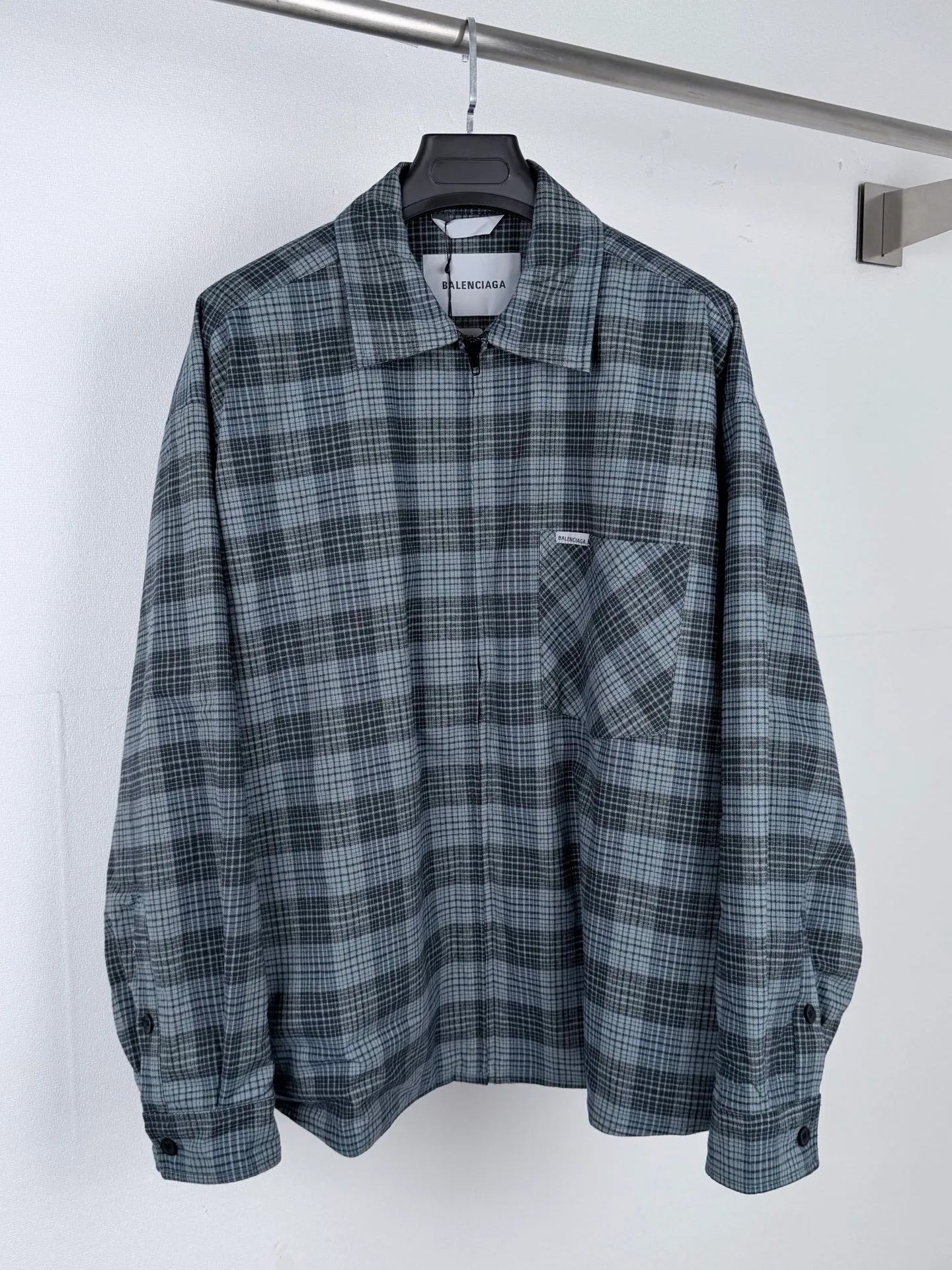
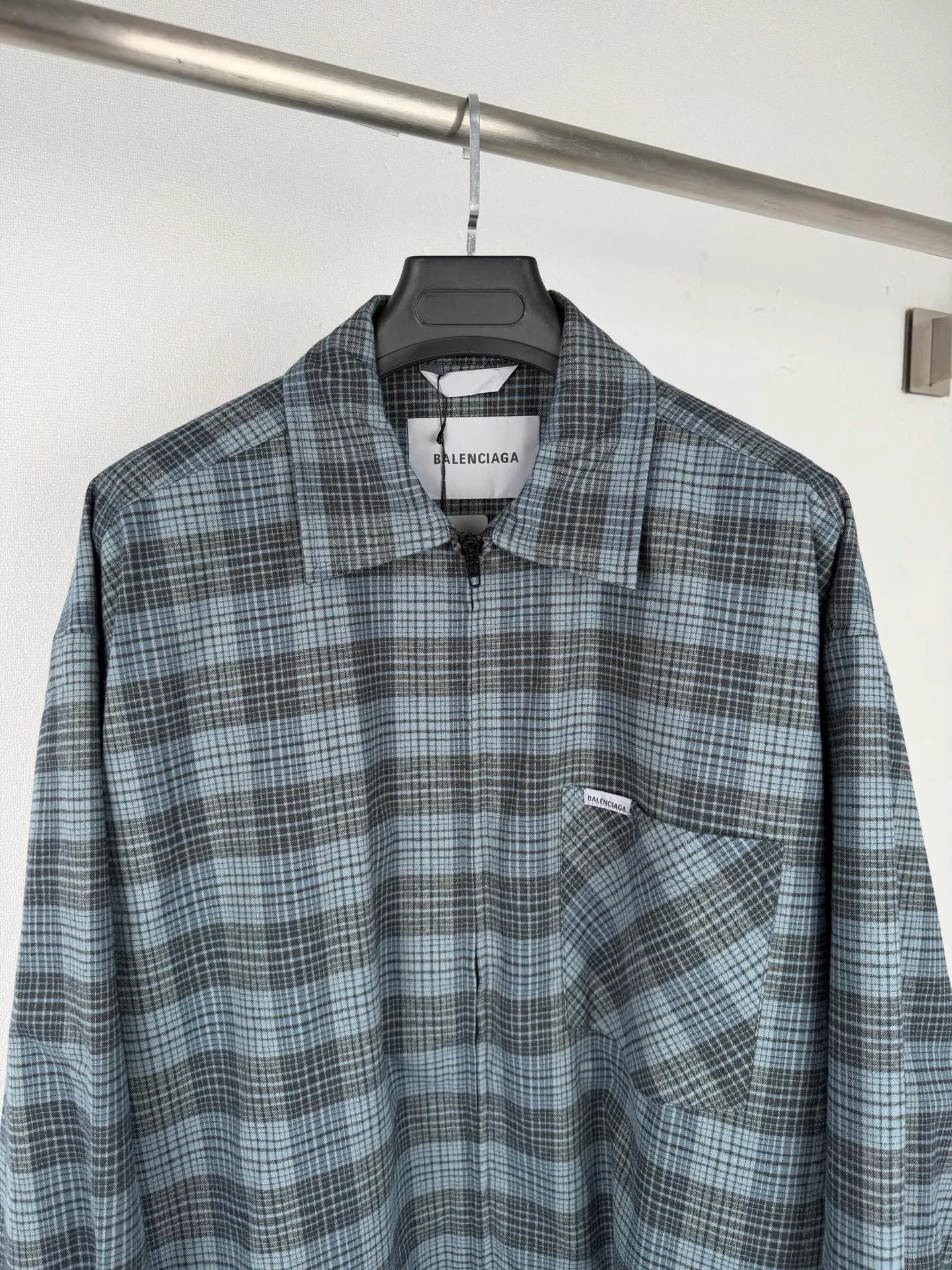
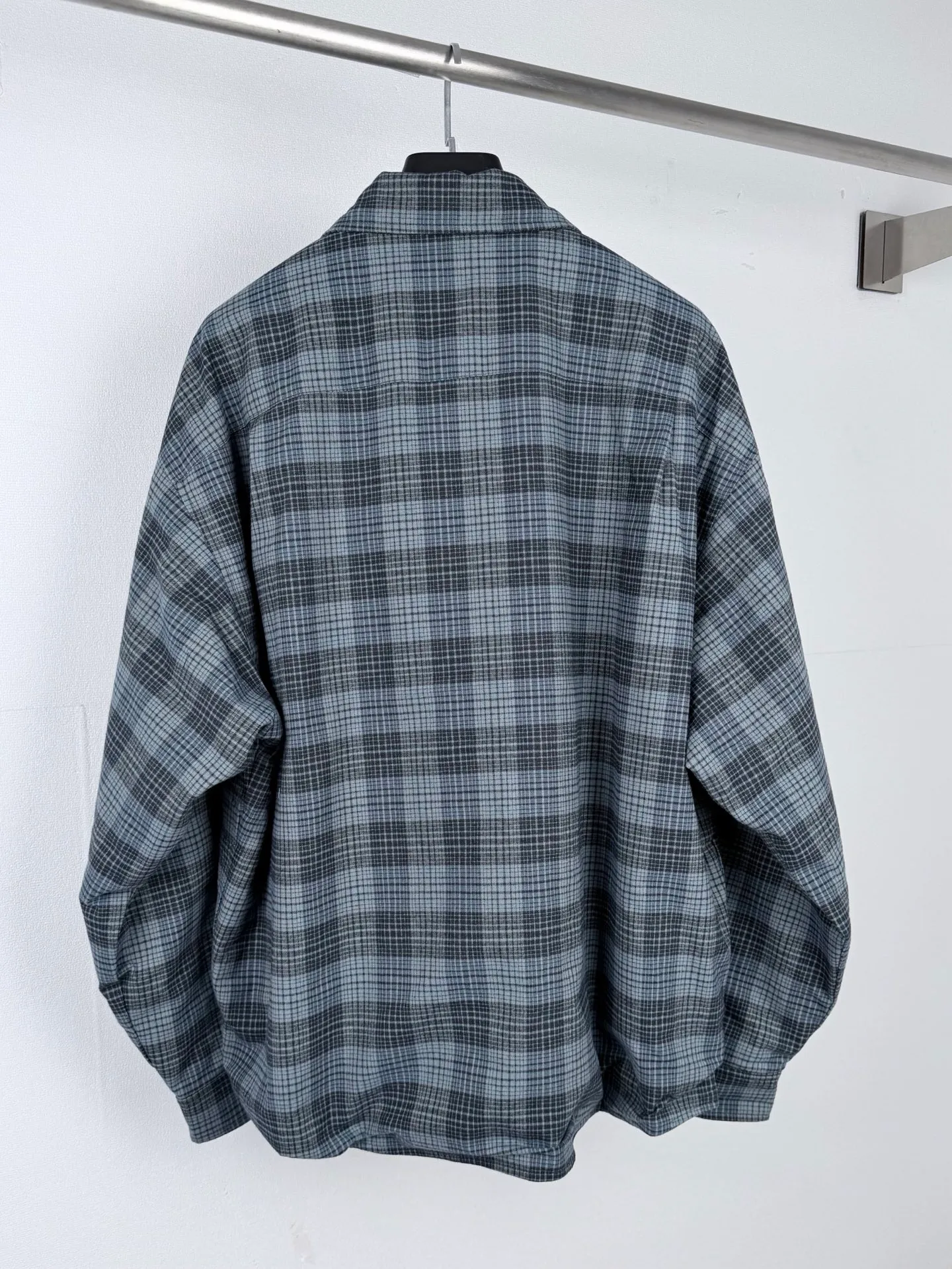
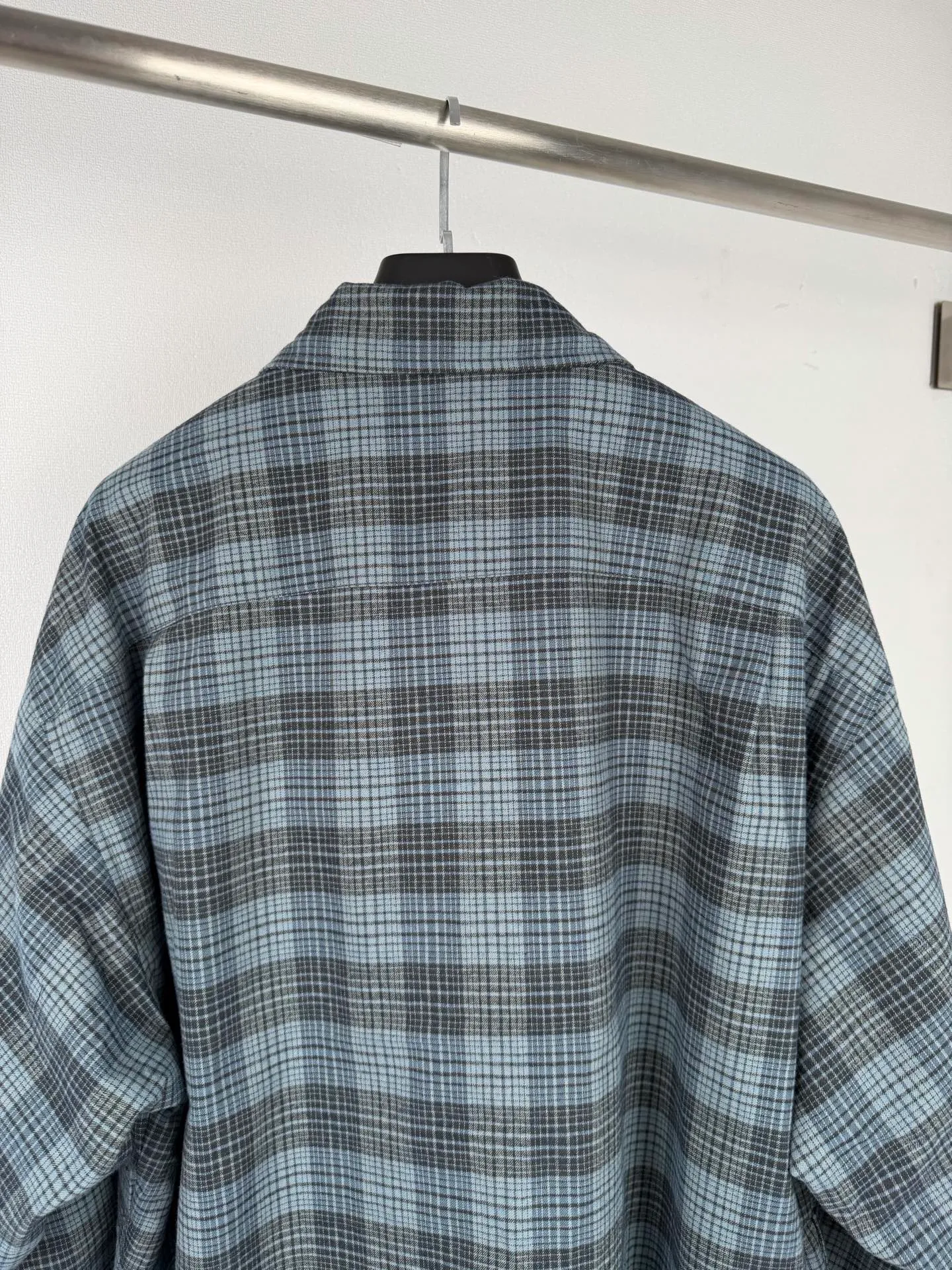
BALENCIAGA/balenciaga blue and gray plaid zipper pocket logo quilted jacket combines a three-layer structure of plaid woven fabric, filling cotton, and lining, and integrates plaid alignment technology and quilted garment production standards. There are multiple process difficulties in the whole process. The surface layer of the body is made of blue-gray Retro plaid fabric, and the cutting machine production strictly follows the global grid standards. The arrangement direction of the cutting pieces is fixed and cannot be changed at will. The horizontal and vertical lines of shoulder seams, side seams, and zipper placket joints must be consistent and coherent. The left chest patch pocket is cut independently, and the bag check pattern must be aligned with the front reference pattern. Slight deviations will destroy the visual integrity and directly increase fabric loss and cutting time. The most difficult part of the style is the three-layer composite sewing. The outer plaid fabric, filling cotton, and lining fabric have different physical properties, and the preshrinking processing parameters need to be adjusted separately. Pressure and temperature control are crucial during lamination operations. Once the parameters are out of balance, it can easily cause fabric stretch and distortion, plaid dislocation, and wrinkles and bulges in garments. At the same time, it is necessary to reasonably plan the quilting line to avoid the visual beauty of the grid pattern from being cut by the lines on the basis of firmly fixing the cotton layer and preventing cotton from running away. The placket adopts a centered zipper structure. It is difficult to sew the zipper tape and the quilted panels. It is required that the width of the left and right plackets be equal, the zipper routing is straight and smooth, and there is no lag in opening and closing. When the shirt lapel is filled with cotton, the thickness of the cotton needs to be controlled to prevent the collar from becoming bloated and unnaturally folded. The metal nameplate of the chest pocket is sewn at fixed points to avoid pulling the fabric during the operation and ensure that the plaid pattern is smooth and not deformed. The quilted material increases the overall thickness of the fabric. When sewing, you need to continuously adjust the presser foot pressure and stitch length to adapt to changes in sandwich thickness. The low-temperature and gentle ironing process is used for post-finishing to prevent the plaid from fading and the cotton layer from clumping due to high temperatures. From the precise alignment of cutting pieces, three-layer fabric pretreatment, composite quilting to garment finalization inspection, the processes are interlocking and the error tolerance rate is extremely low, testing the accuracy of plate making, equipment control and turning technology. Size:XS S M L
BALENCIAGA/balenciaga blue and gray plaid zipper pocket logo quilted jacket combines a three-layer structure of plaid wo...
BALENCIAGA/Balenciaga blue and gray plaid zipper pocket logo quilted jacket combines a three-layer structure of plaid woven fabric, cotton filling, and lining, and integrates plaid alignment technology and quilted garment production standards. There are multiple process difficulties in the whole process. The surface layer of the body is made of blue-gray Retro plaid fabric, and the cutting machine production strictly follows the global grid standards. The arrangement direction of the cutting pieces is fixed and cannot be changed at will. The horizontal and vertical lines of shoulder seams, side seams, and zipper placket joints must be consistent and coherent. The left chest patch pocket is cut independently, and the bag check pattern must be aligned with the front reference pattern. Slight deviations will destroy the visual integrity and directly increase fabric loss and cutting time. The most difficult part of the style is the three-layer composite sewing. The outer plaid fabric, filling cotton, and lining fabric have different physical properties, and the preshrinking processing parameters need to be adjusted separately. Pressure and temperature control are crucial during lamination operations. Once the parameters are out of balance, it can easily cause fabric stretch and distortion, plaid dislocation, and wrinkles and bulges in garments. At the same time, it is necessary to reasonably plan the quilting line to avoid the visual beauty of the grid pattern from being cut by the lines on the basis of firmly fixing the cotton layer and preventing cotton from running away. The placket adopts a centered zipper structure. It is difficult to sew the zipper tape and the quilted panels. It is required that the width of the left and right plackets be equal, the zipper routing is straight and smooth, and there is no lag in opening and closing. When the shirt lapel is filled with cotton, the thickness of the cotton needs to be controlled to prevent the collar from becoming bloated and unnaturally folded. The metal nameplate of the chest pocket is sewn at fixed points to avoid pulling the fabric during the operation and ensure that the plaid pattern is smooth and not deformed. The quilted material increases the overall thickness of the fabric. When sewing, you need to continuously adjust the presser foot pressure and stitch length to adapt to changes in sandwich thickness. The low-temperature and gentle ironing process is used for post-finishing to prevent the plaid from fading and the cotton layer from clumping due to high temperatures. From the precise alignment of cutting pieces, three-layer fabric pretreatment, composite quilting to garment finalization inspection, the processes are interlocking and the error tolerance rate is extremely low, testing the accuracy of plate making, equipment control and turning technology. Size:XS S M L
BALENCIAGA/balenciaga blue and gray plaid zipper pocket logo quilted jacket combines a three-layer structure of plaid woven fabric, filling cotton, and lining, and integrates plaid alignment technology and quilted garment production standards. There are multiple process difficulties in the whole process. The surface layer of the body is made of blue-gray Retro plaid fabric, and the cutting machine production strictly follows the global grid standards. The arrangement direction of the cutting pieces is fixed and cannot be changed at will. The horizontal and vertical lines of shoulder seams, side seams, and zipper placket joints must be consistent and coherent. The left chest patch pocket is cut independently, and the bag check pattern must be aligned with the front reference pattern. Slight deviations will destroy the visual integrity and directly increase fabric loss and cutting time. The most difficult part of the style is the three-layer composite sewing. The outer plaid fabric, filling cotton, and lining fabric have different physical properties, and the preshrinking processing parameters need to be adjusted separately. Pressure and temperature control are crucial during lamination operations. Once the parameters are out of balance, it can easily cause fabric stretch and distortion, plaid dislocation, and wrinkles and bulges in garments. At the same time, it is necessary to reasonably plan the quilting line to avoid the visual beauty of the grid pattern from being cut by the lines on the basis of firmly fixing the cotton layer and preventing cotton from running away. The placket adopts a centered zipper structure. It is difficult to sew the zipper tape and the quilted panels. It is required that the width of the left and right plackets be equal, the zipper routing is straight and smooth, and there is no lag in opening and closing. When the shirt lapel is filled with cotton, the thickness of the cotton needs to be controlled to prevent the collar from becoming bloated and unnaturally folded. The metal nameplate of the chest pocket is sewn at fixed points to avoid pulling the fabric during the operation and ensure that the plaid pattern is smooth and not deformed. The quilted material increases the overall thickness of the fabric. When sewing, you need to continuously adjust the presser foot pressure and stitch length to adapt to changes in sandwich thickness. The low-temperature and gentle ironing process is used for post-finishing to prevent the plaid from fading and the cotton layer from clumping due to high temperatures. From the precise alignment of cutting pieces, three-layer fabric pretreatment, composite quilting to garment finalization inspection, the processes are interlocking and the error tolerance rate is extremely low, testing the accuracy of plate making, equipment control and turning technology. Size:XS S M L
2026-10-29
BALENCIAGA/balenciaga blue and gray plaid zipper pocket logo quilted jacket combines a three-layer structure of plaid woven fabric, filling cotton, and lining, and integrates plaid alignment technology and quilted garment production standards. There are multiple process difficulties in the whole process. The surface layer of the body is made of blue-gray Retro plaid fabric, and the cutting machine production strictly follows the global grid standards. The arrangement direction of the cutting pieces is fixed and cannot be changed at will. The horizontal and vertical lines of shoulder seams, side seams, and zipper placket joints must be consistent and coherent. The left chest patch pocket is cut independently, and the bag check pattern must be aligned with the front reference pattern. Slight deviations will destroy the visual integrity and directly increase fabric loss and cutting time. The most difficult part of the style is the three-layer composite sewing. The outer plaid fabric, filling cotton, and lining fabric have different physical properties, and the preshrinking processing parameters need to be adjusted separately. Pressure and temperature control are crucial during lamination operations. Once the parameters are out of balance, it can easily cause fabric stretch and distortion, plaid dislocation, and wrinkles and bulges in garments. At the same time, it is necessary to reasonably plan the quilting line to avoid the visual beauty of the grid pattern from being cut by the lines on the basis of firmly fixing the cotton layer and preventing cotton from running away. The placket adopts a centered zipper structure. It is difficult to sew the zipper tape and the quilted panels. It is required that the width of the left and right plackets be equal, the zipper routing is straight and smooth, and there is no lag in opening and closing. When the shirt lapel is filled with cotton, the thickness of the cotton needs to be controlled to prevent the collar from becoming bloated and unnaturally folded. The metal nameplate of the chest pocket is sewn at fixed points to avoid pulling the fabric during the operation and ensure that the plaid pattern is smooth and not deformed. The quilted material increases the overall thickness of the fabric. When sewing, you need to continuously adjust the presser foot pressure and stitch length to adapt to changes in sandwich thickness. The low-temperature and gentle ironing process is used for post-finishing to prevent the plaid from fading and the cotton layer from clumping due to high temperatures. From the precise alignment of cutting pieces, three-layer fabric pretreatment, composite quilting to garment finalization inspection, the processes are interlocking and the error tolerance rate is extremely low, testing the accuracy of plate making, equipment control and turning technology. Size:XS S M L
2026-10-29
BALENCIAGA/balenciaga blue and gray plaid zipper pocket logo quilted jacket combines a three-layer structure of plaid woven fabric, filling cotton, and lining, and integrates plaid alignment technology and quilted garment production standards. There are multiple process difficulties in the whole process. The surface layer of the body is made of blue-gray Retro plaid fabric, and the cutting machine production strictly follows the global grid standards. The arrangement direction of the cutting pieces is fixed and cannot be changed at will. The horizontal and vertical lines of shoulder seams, side seams, and zipper placket joints must be consistent and coherent. The left chest patch pocket is cut independently, and the bag check pattern must be aligned with the front reference pattern. Slight deviations will destroy the visual integrity and directly increase fabric loss and cutting time. The most difficult part of the style is the three-layer composite sewing. The outer plaid fabric, filling cotton, and lining fabric have different physical properties, and the preshrinking processing parameters need to be adjusted separately. Pressure and temperature control are crucial during lamination operations. Once the parameters are out of balance, it can easily cause fabric stretch and distortion, plaid dislocation, and wrinkles and bulges in garments. At the same time, it is necessary to reasonably plan the quilting line to avoid the visual beauty of the grid pattern from being cut by the lines on the basis of firmly fixing the cotton layer and preventing cotton from running away. The placket adopts a centered zipper structure. It is difficult to sew the zipper tape and the quilted panels. It is required that the width of the left and right plackets be equal, the zipper routing is straight and smooth, and there is no lag in opening and closing. When the shirt lapel is filled with cotton, the thickness of the cotton needs to be controlled to prevent the collar from becoming bloated and unnaturally folded. The metal nameplate of the chest pocket is sewn at fixed points to avoid pulling the fabric during the operation and ensure that the plaid pattern is smooth and not deformed. The quilted material increases the overall thickness of the fabric. When sewing, you need to continuously adjust the presser foot pressure and stitch length to adapt to changes in sandwich thickness. The low-temperature and gentle ironing process is used for post-finishing to prevent the plaid from fading and the cotton layer from clumping due to high temperatures. From the precise alignment of cutting pieces, three-layer fabric pretreatment, composite quilting to garment finalization inspection, the processes are interlocking and the error tolerance rate is extremely low, testing the accuracy of plate making, equipment control and turning technology. Size:XS S M L
2026-10-29
BALENCIAGA/balenciaga blue and gray plaid zipper pocket logo quilted jacket combines a three-layer structure of plaid woven fabric, filling cotton, and lining, and integrates plaid alignment technology and quilted garment production standards. There are multiple process difficulties in the whole process. The surface layer of the body is made of blue-gray Retro plaid fabric, and the cutting machine production strictly follows the global grid standards. The arrangement direction of the cutting pieces is fixed and cannot be changed at will. The horizontal and vertical lines of shoulder seams, side seams, and zipper placket joints must be consistent and coherent. The left chest patch pocket is cut independently, and the bag check pattern must be aligned with the front reference pattern. Slight deviations will destroy the visual integrity and directly increase fabric loss and cutting time. The most difficult part of the style is the three-layer composite sewing. The outer plaid fabric, filling cotton, and lining fabric have different physical properties, and the preshrinking processing parameters need to be adjusted separately. Pressure and temperature control are crucial during lamination operations. Once the parameters are out of balance, it can easily cause fabric stretch and distortion, plaid dislocation, and wrinkles and bulges in garments. At the same time, it is necessary to reasonably plan the quilting line to avoid the visual beauty of the grid pattern from being cut by the lines on the basis of firmly fixing the cotton layer and preventing cotton from running away. The placket adopts a centered zipper structure. It is difficult to sew the zipper tape and the quilted panels. It is required that the width of the left and right plackets be equal, the zipper routing is straight and smooth, and there is no lag in opening and closing. When the shirt lapel is filled with cotton, the thickness of the cotton needs to be controlled to prevent the collar from becoming bloated and unnaturally folded. The metal nameplate of the chest pocket is sewn at fixed points to avoid pulling the fabric during the operation and ensure that the plaid pattern is smooth and not deformed. The quilted material increases the overall thickness of the fabric. When sewing, you need to continuously adjust the presser foot pressure and stitch length to adapt to changes in sandwich thickness. The low-temperature and gentle ironing process is used for post-finishing to prevent the plaid from fading and the cotton layer from clumping due to high temperatures. From the precise alignment of cutting pieces, three-layer fabric pretreatment, composite quilting to garment finalization inspection, the processes are interlocking and the error tolerance rate is extremely low, testing the accuracy of plate making, equipment control and turning technology. Size:XS S M L
2026-10-29
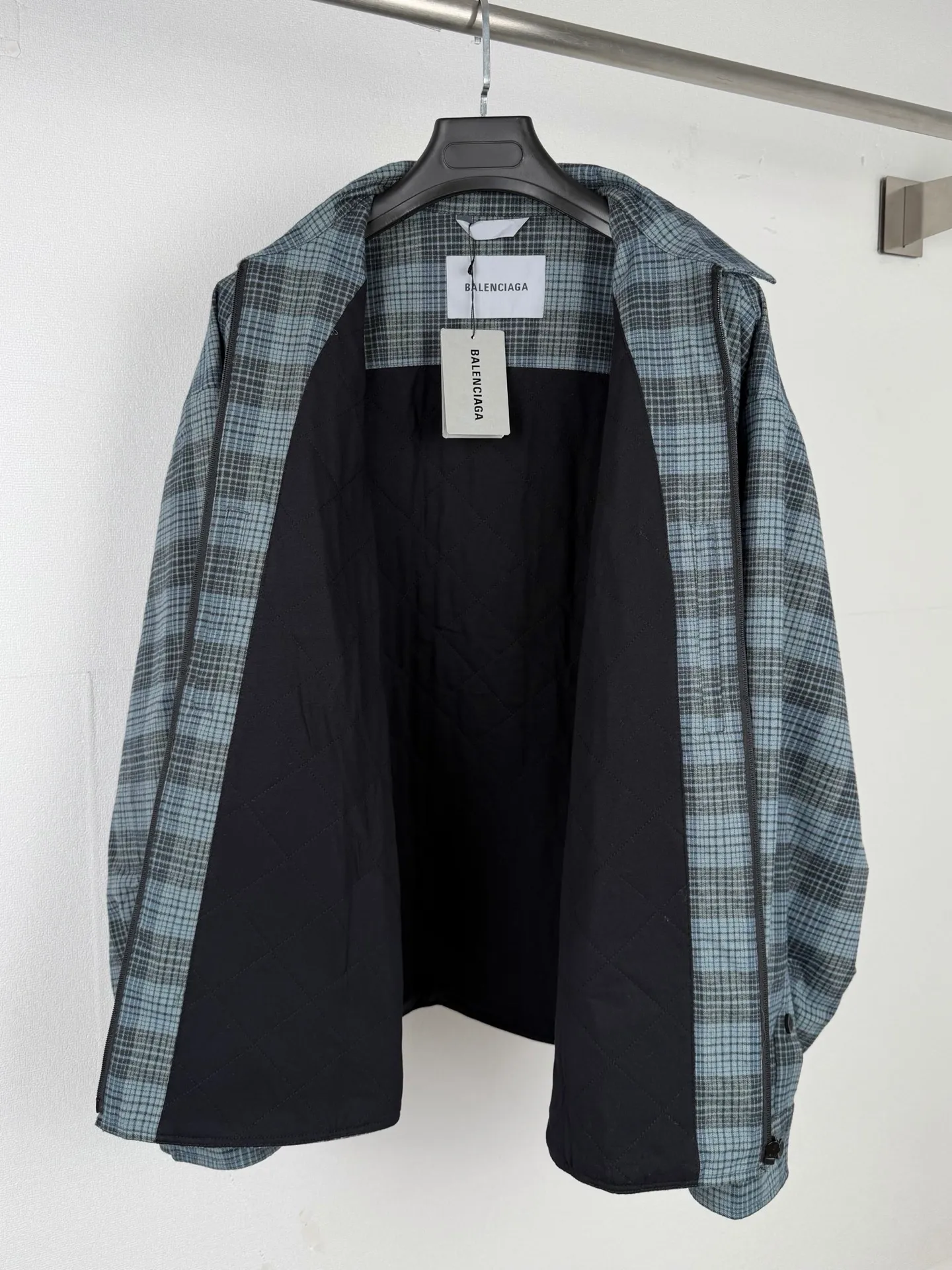
BALENCIAGA/balenciaga blue and gray plaid zipper pocket logo quilted jacket combines a three-layer structure of plaid woven fabric, filling cotton, and lining, and integrates plaid alignment technology and quilted garment production standards. There are multiple process difficulties in the whole process. The surface layer of the body is made of blue-gray Retro plaid fabric, and the cutting machine production strictly follows the global grid standards. The arrangement direction of the cutting pieces is fixed and cannot be changed at will. The horizontal and vertical lines of shoulder seams, side seams, and zipper placket joints must be consistent and coherent. The left chest patch pocket is cut independently, and the bag check pattern must be aligned with the front reference pattern. Slight deviations will destroy the visual integrity and directly increase fabric loss and cutting time. The most difficult part of the style is the three-layer composite sewing. The outer plaid fabric, filling cotton, and lining fabric have different physical properties, and the preshrinking processing parameters need to be adjusted separately. Pressure and temperature control are crucial during lamination operations. Once the parameters are out of balance, it can easily cause fabric stretch and distortion, plaid dislocation, and wrinkles and bulges in garments. At the same time, it is necessary to reasonably plan the quilting line to avoid the visual beauty of the grid pattern from being cut by the lines on the basis of firmly fixing the cotton layer and preventing cotton from running away. The placket adopts a centered zipper structure. It is difficult to sew the zipper tape and the quilted panels. It is required that the width of the left and right plackets be equal, the zipper routing is straight and smooth, and there is no lag in opening and closing. When the shirt lapel is filled with cotton, the thickness of the cotton needs to be controlled to prevent the collar from becoming bloated and unnaturally folded. The metal nameplate of the chest pocket is sewn at fixed points to avoid pulling the fabric during the operation and ensure that the plaid pattern is smooth and not deformed. The quilted material increases the overall thickness of the fabric. When sewing, you need to continuously adjust the presser foot pressure and stitch length to adapt to changes in sandwich thickness. The low-temperature and gentle ironing process is used for post-finishing to prevent the plaid from fading and the cotton layer from clumping due to high temperatures. From the precise alignment of cutting pieces, three-layer fabric pretreatment, composite quilting to garment finalization inspection, the processes are interlocking and the error tolerance rate is extremely low, testing the accuracy of plate making, equipment control and turning technology. Size:XS S M L
2026-10-29
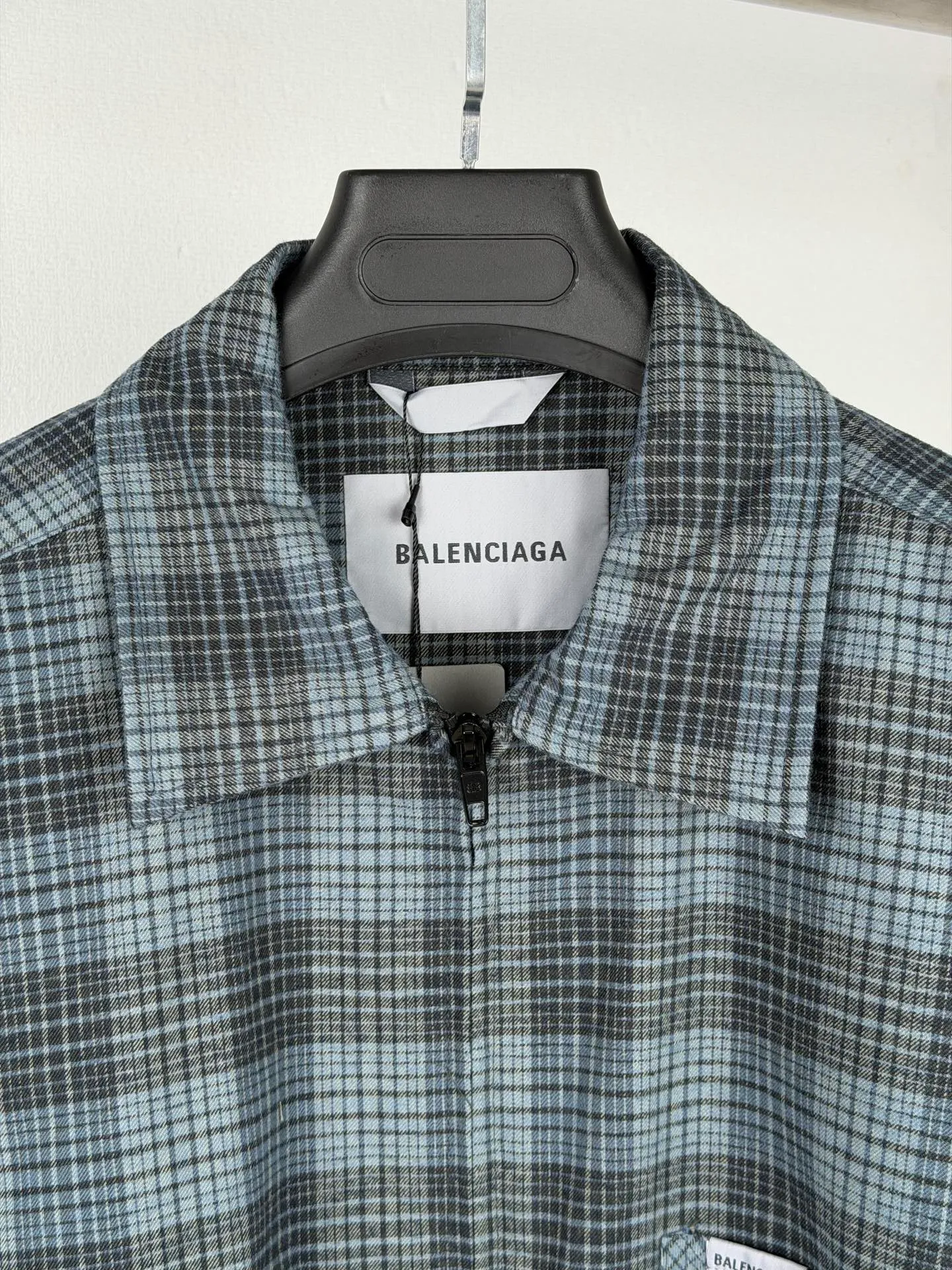
BALENCIAGA/balenciaga blue and gray plaid zipper pocket logo quilted jacket combines a three-layer structure of plaid woven fabric, filling cotton, and lining, and integrates plaid alignment technology and quilted garment production standards. There are multiple process difficulties in the whole process. The surface layer of the body is made of blue-gray Retro plaid fabric, and the cutting machine production strictly follows the global grid standards. The arrangement direction of the cutting pieces is fixed and cannot be changed at will. The horizontal and vertical lines of shoulder seams, side seams, and zipper placket joints must be consistent and coherent. The left chest patch pocket is cut independently, and the bag check pattern must be aligned with the front reference pattern. Slight deviations will destroy the visual integrity and directly increase fabric loss and cutting time. The most difficult part of the style is the three-layer composite sewing. The outer plaid fabric, filling cotton, and lining fabric have different physical properties, and the preshrinking processing parameters need to be adjusted separately. Pressure and temperature control are crucial during lamination operations. Once the parameters are out of balance, it can easily cause fabric stretch and distortion, plaid dislocation, and wrinkles and bulges in garments. At the same time, it is necessary to reasonably plan the quilting line to avoid the visual beauty of the grid pattern from being cut by the lines on the basis of firmly fixing the cotton layer and preventing cotton from running away. The placket adopts a centered zipper structure. It is difficult to sew the zipper tape and the quilted panels. It is required that the width of the left and right plackets be equal, the zipper routing is straight and smooth, and there is no lag in opening and closing. When the shirt lapel is filled with cotton, the thickness of the cotton needs to be controlled to prevent the collar from becoming bloated and unnaturally folded. The metal nameplate of the chest pocket is sewn at fixed points to avoid pulling the fabric during the operation and ensure that the plaid pattern is smooth and not deformed. The quilted material increases the overall thickness of the fabric. When sewing, you need to continuously adjust the presser foot pressure and stitch length to adapt to changes in sandwich thickness. The low-temperature and gentle ironing process is used for post-finishing to prevent the plaid from fading and the cotton layer from clumping due to high temperatures. From the precise alignment of cutting pieces, three-layer fabric pretreatment, composite quilting to garment finalization inspection, the processes are interlocking and the error tolerance rate is extremely low, testing the accuracy of plate making, equipment control and turning technology. Size:XS S M L
2026-10-29
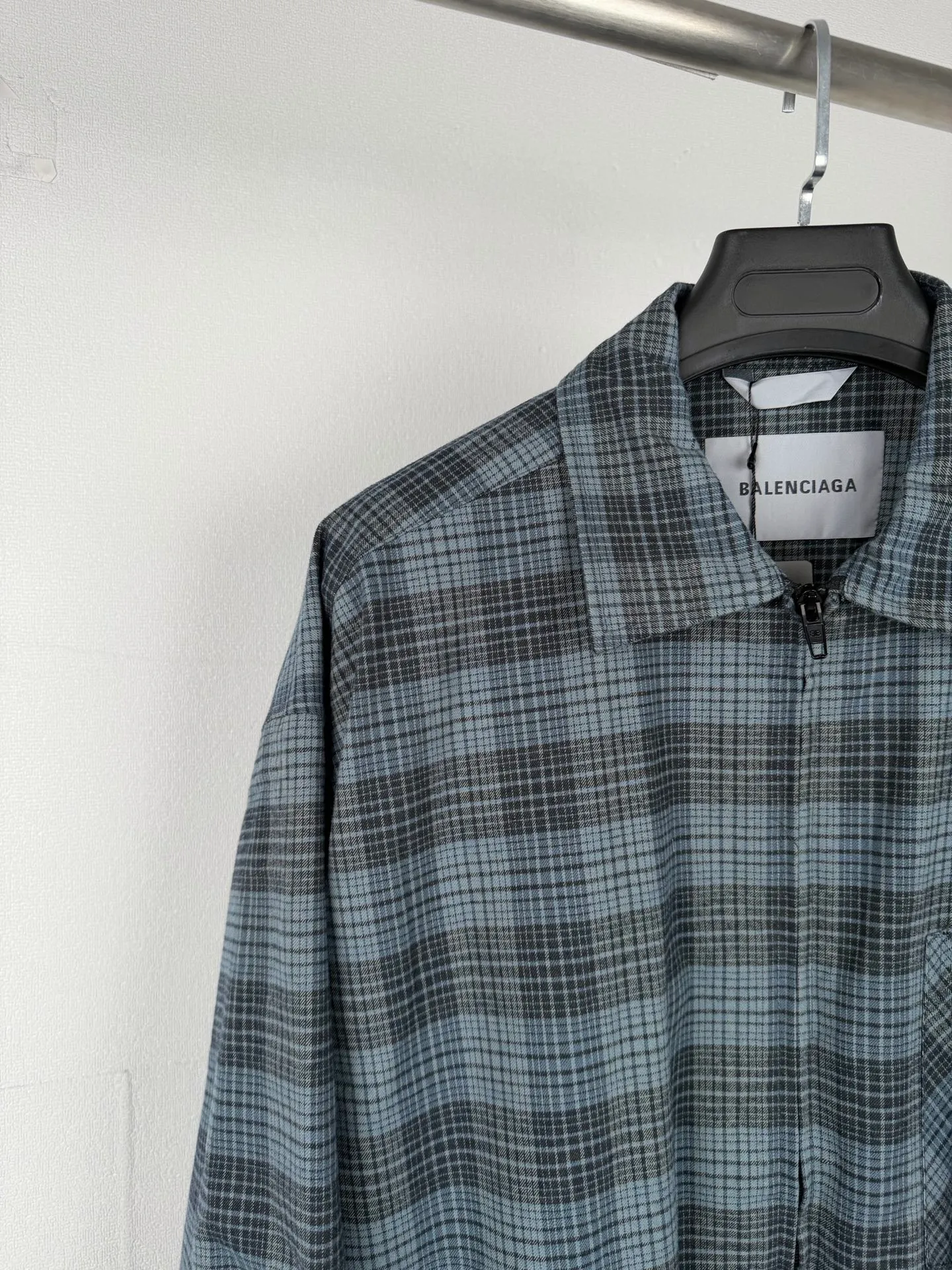
BALENCIAGA/balenciaga blue and gray plaid zipper pocket logo quilted jacket combines a three-layer structure of plaid woven fabric, filling cotton, and lining, and integrates plaid alignment technology and quilted garment production standards. There are multiple process difficulties in the whole process. The surface layer of the body is made of blue-gray Retro plaid fabric, and the cutting machine production strictly follows the global grid standards. The arrangement direction of the cutting pieces is fixed and cannot be changed at will. The horizontal and vertical lines of shoulder seams, side seams, and zipper placket joints must be consistent and coherent. The left chest patch pocket is cut independently, and the bag check pattern must be aligned with the front reference pattern. Slight deviations will destroy the visual integrity and directly increase fabric loss and cutting time. The most difficult part of the style is the three-layer composite sewing. The outer plaid fabric, filling cotton, and lining fabric have different physical properties, and the preshrinking processing parameters need to be adjusted separately. Pressure and temperature control are crucial during lamination operations. Once the parameters are out of balance, it can easily cause fabric stretch and distortion, plaid dislocation, and wrinkles and bulges in garments. At the same time, it is necessary to reasonably plan the quilting line to avoid the visual beauty of the grid pattern from being cut by the lines on the basis of firmly fixing the cotton layer and preventing cotton from running away. The placket adopts a centered zipper structure. It is difficult to sew the zipper tape and the quilted panels. It is required that the width of the left and right plackets be equal, the zipper routing is straight and smooth, and there is no lag in opening and closing. When the shirt lapel is filled with cotton, the thickness of the cotton needs to be controlled to prevent the collar from becoming bloated and unnaturally folded. The metal nameplate of the chest pocket is sewn at fixed points to avoid pulling the fabric during the operation and ensure that the plaid pattern is smooth and not deformed. The quilted material increases the overall thickness of the fabric. When sewing, you need to continuously adjust the presser foot pressure and stitch length to adapt to changes in sandwich thickness. The low-temperature and gentle ironing process is used for post-finishing to prevent the plaid from fading and the cotton layer from clumping due to high temperatures. From the precise alignment of cutting pieces, three-layer fabric pretreatment, composite quilting to garment finalization inspection, the processes are interlocking and the error tolerance rate is extremely low, testing the accuracy of plate making, equipment control and turning technology. Size:XS S M L
2026-10-29
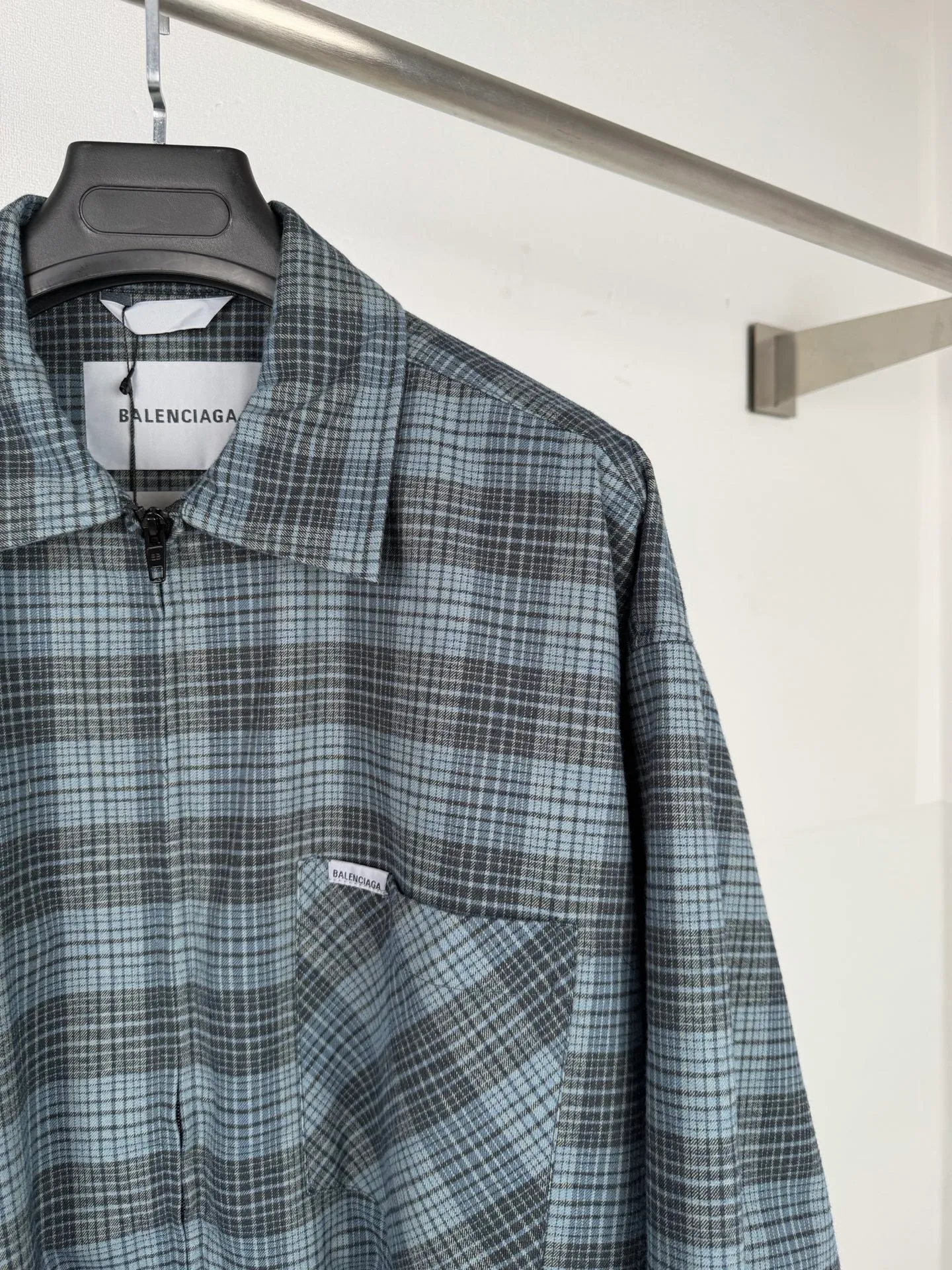
BALENCIAGA/balenciaga blue and gray plaid zipper pocket logo quilted jacket combines a three-layer structure of plaid woven fabric, filling cotton, and lining, and integrates plaid alignment technology and quilted garment production standards. There are multiple process difficulties in the whole process. The surface layer of the body is made of blue-gray Retro plaid fabric, and the cutting machine production strictly follows the global grid standards. The arrangement direction of the cutting pieces is fixed and cannot be changed at will. The horizontal and vertical lines of shoulder seams, side seams, and zipper placket joints must be consistent and coherent. The left chest patch pocket is cut independently, and the bag check pattern must be aligned with the front reference pattern. Slight deviations will destroy the visual integrity and directly increase fabric loss and cutting time. The most difficult part of the style is the three-layer composite sewing. The outer plaid fabric, filling cotton, and lining fabric have different physical properties, and the preshrinking processing parameters need to be adjusted separately. Pressure and temperature control are crucial during lamination operations. Once the parameters are out of balance, it can easily cause fabric stretch and distortion, plaid dislocation, and wrinkles and bulges in garments. At the same time, it is necessary to reasonably plan the quilting line to avoid the visual beauty of the grid pattern from being cut by the lines on the basis of firmly fixing the cotton layer and preventing cotton from running away. The placket adopts a centered zipper structure. It is difficult to sew the zipper tape and the quilted panels. It is required that the width of the left and right plackets be equal, the zipper routing is straight and smooth, and there is no lag in opening and closing. When the shirt lapel is filled with cotton, the thickness of the cotton needs to be controlled to prevent the collar from becoming bloated and unnaturally folded. The metal nameplate of the chest pocket is sewn at fixed points to avoid pulling the fabric during the operation and ensure that the plaid pattern is smooth and not deformed. The quilted material increases the overall thickness of the fabric. When sewing, you need to continuously adjust the presser foot pressure and stitch length to adapt to changes in sandwich thickness. The low-temperature and gentle ironing process is used for post-finishing to prevent the plaid from fading and the cotton layer from clumping due to high temperatures. From the precise alignment of cutting pieces, three-layer fabric pretreatment, composite quilting to garment finalization inspection, the processes are interlocking and the error tolerance rate is extremely low, testing the accuracy of plate making, equipment control and turning technology. Size:XS S M L
2026-10-29
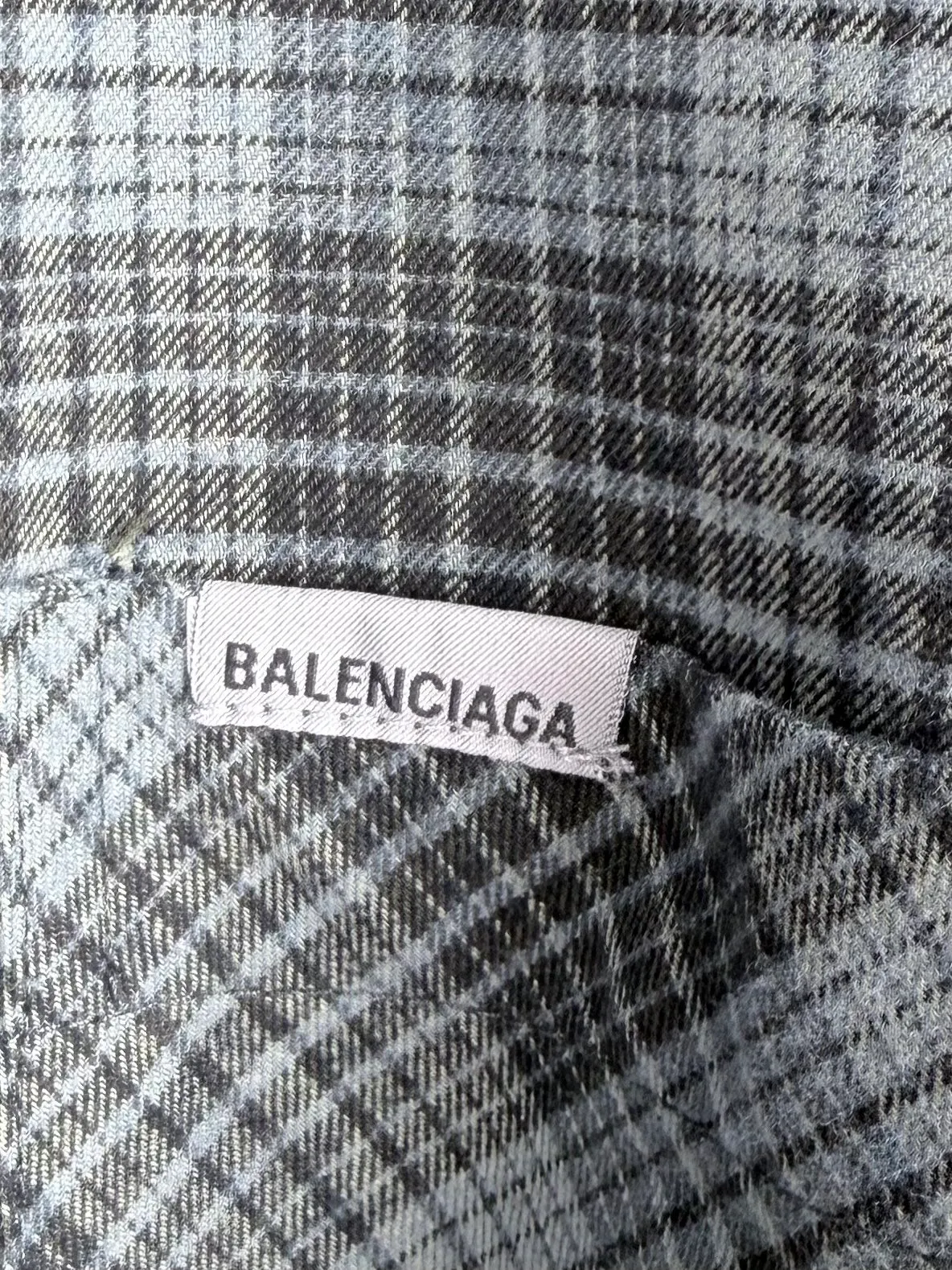
BALENCIAGA/balenciaga blue and gray plaid zipper pocket logo quilted jacket combines a three-layer structure of plaid woven fabric, filling cotton, and lining, and integrates plaid alignment technology and quilted garment production standards. There are multiple process difficulties in the whole process. The surface layer of the body is made of blue-gray Retro plaid fabric, and the cutting machine production strictly follows the global grid standards. The arrangement direction of the cutting pieces is fixed and cannot be changed at will. The horizontal and vertical lines of shoulder seams, side seams, and zipper placket joints must be consistent and coherent. The left chest patch pocket is cut independently, and the bag check pattern must be aligned with the front reference pattern. Slight deviations will destroy the visual integrity and directly increase fabric loss and cutting time. The most difficult part of the style is the three-layer composite sewing. The outer plaid fabric, filling cotton, and lining fabric have different physical properties, and the preshrinking processing parameters need to be adjusted separately. Pressure and temperature control are crucial during lamination operations. Once the parameters are out of balance, it can easily cause fabric stretch and distortion, plaid dislocation, and wrinkles and bulges in garments. At the same time, it is necessary to reasonably plan the quilting line to avoid the visual beauty of the grid pattern from being cut by the lines on the basis of firmly fixing the cotton layer and preventing cotton from running away. The placket adopts a centered zipper structure. It is difficult to sew the zipper tape and the quilted panels. It is required that the width of the left and right plackets be equal, the zipper routing is straight and smooth, and there is no lag in opening and closing. When the shirt lapel is filled with cotton, the thickness of the cotton needs to be controlled to prevent the collar from becoming bloated and unnaturally folded. The metal nameplate of the chest pocket is sewn at fixed points to avoid pulling the fabric during the operation and ensure that the plaid pattern is smooth and not deformed. The quilted material increases the overall thickness of the fabric. When sewing, you need to continuously adjust the presser foot pressure and stitch length to adapt to changes in sandwich thickness. The low-temperature and gentle ironing process is used for post-finishing to prevent the plaid from fading and the cotton layer from clumping due to high temperatures. From the precise alignment of cutting pieces, three-layer fabric pretreatment, composite quilting to garment finalization inspection, the processes are interlocking and the error tolerance rate is extremely low, testing the accuracy of plate making, equipment control and turning technology. Size:XS S M L
2026-10-29
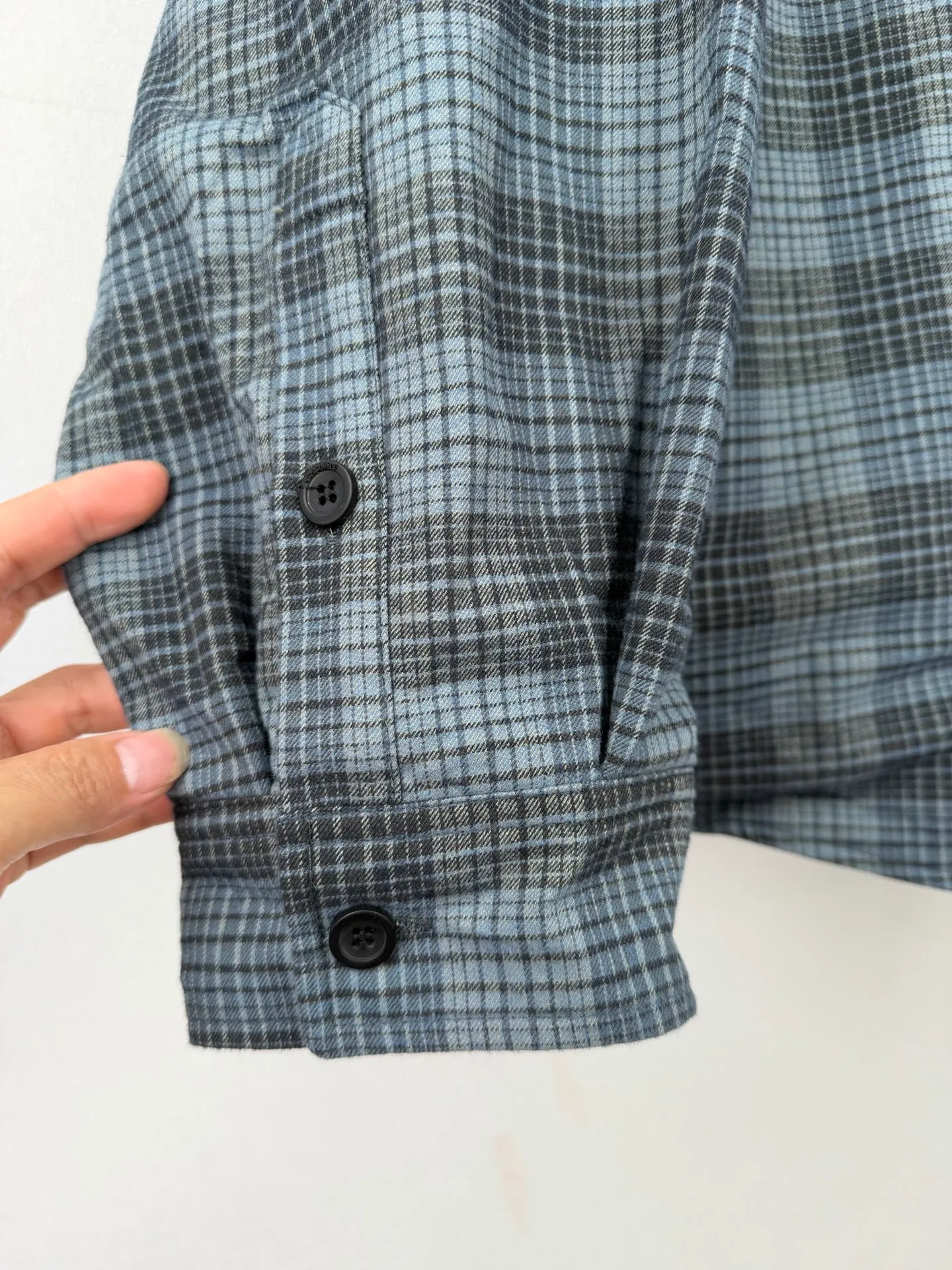
BALENCIAGA/balenciaga blue and gray plaid zipper pocket logo quilted jacket combines a three-layer structure of plaid woven fabric, filling cotton, and lining, and integrates plaid alignment technology and quilted garment production standards. There are multiple process difficulties in the whole process. The surface layer of the body is made of blue-gray Retro plaid fabric, and the cutting machine production strictly follows the global grid standards. The arrangement direction of the cutting pieces is fixed and cannot be changed at will. The horizontal and vertical lines of shoulder seams, side seams, and zipper placket joints must be consistent and coherent. The left chest patch pocket is cut independently, and the bag check pattern must be aligned with the front reference pattern. Slight deviations will destroy the visual integrity and directly increase fabric loss and cutting time. The most difficult part of the style is the three-layer composite sewing. The outer plaid fabric, filling cotton, and lining fabric have different physical properties, and the preshrinking processing parameters need to be adjusted separately. Pressure and temperature control are crucial during lamination operations. Once the parameters are out of balance, it can easily cause fabric stretch and distortion, plaid dislocation, and wrinkles and bulges in garments. At the same time, it is necessary to reasonably plan the quilting line to avoid the visual beauty of the grid pattern from being cut by the lines on the basis of firmly fixing the cotton layer and preventing cotton from running away. The placket adopts a centered zipper structure. It is difficult to sew the zipper tape and the quilted panels. It is required that the width of the left and right plackets be equal, the zipper routing is straight and smooth, and there is no lag in opening and closing. When the shirt lapel is filled with cotton, the thickness of the cotton needs to be controlled to prevent the collar from becoming bloated and unnaturally folded. The metal nameplate of the chest pocket is sewn at fixed points to avoid pulling the fabric during the operation and ensure that the plaid pattern is smooth and not deformed. The quilted material increases the overall thickness of the fabric. When sewing, you need to continuously adjust the presser foot pressure and stitch length to adapt to changes in sandwich thickness. The low-temperature and gentle ironing process is used for post-finishing to prevent the plaid from fading and the cotton layer from clumping due to high temperatures. From the precise alignment of cutting pieces, three-layer fabric pretreatment, composite quilting to garment finalization inspection, the processes are interlocking and the error tolerance rate is extremely low, testing the accuracy of plate making, equipment control and turning technology. Size:XS S M L
2026-10-29
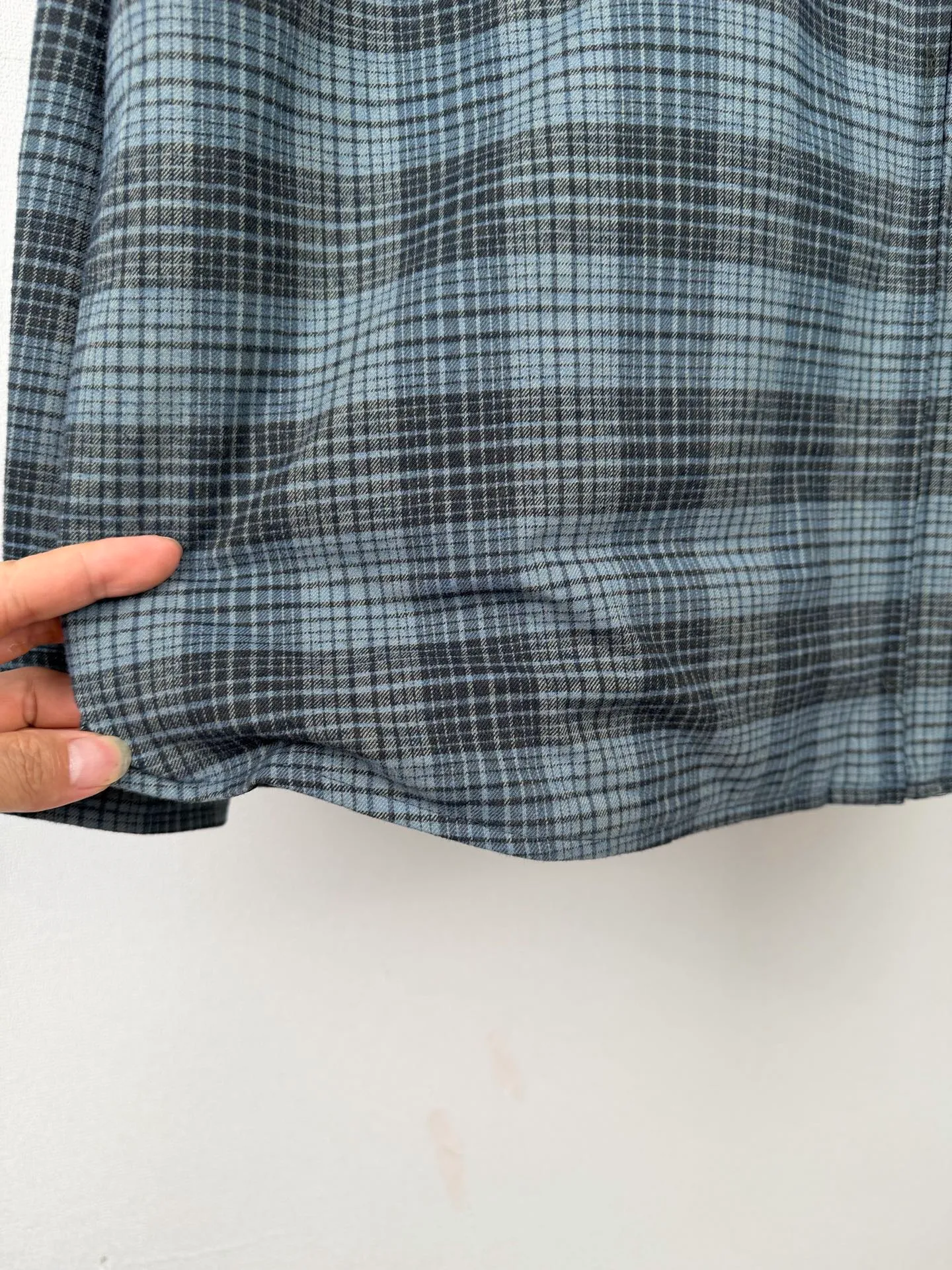
BALENCIAGA/balenciaga blue and gray plaid zipper pocket logo quilted jacket combines a three-layer structure of plaid woven fabric, filling cotton, and lining, and integrates plaid alignment technology and quilted garment production standards. There are multiple process difficulties in the whole process. The surface layer of the body is made of blue-gray Retro plaid fabric, and the cutting machine production strictly follows the global grid standards. The arrangement direction of the cutting pieces is fixed and cannot be changed at will. The horizontal and vertical lines of shoulder seams, side seams, and zipper placket joints must be consistent and coherent. The left chest patch pocket is cut independently, and the bag check pattern must be aligned with the front reference pattern. Slight deviations will destroy the visual integrity and directly increase fabric loss and cutting time. The most difficult part of the style is the three-layer composite sewing. The outer plaid fabric, filling cotton, and lining fabric have different physical properties, and the preshrinking processing parameters need to be adjusted separately. Pressure and temperature control are crucial during lamination operations. Once the parameters are out of balance, it can easily cause fabric stretch and distortion, plaid dislocation, and wrinkles and bulges in garments. At the same time, it is necessary to reasonably plan the quilting line to avoid the visual beauty of the grid pattern from being cut by the lines on the basis of firmly fixing the cotton layer and preventing cotton from running away. The placket adopts a centered zipper structure. It is difficult to sew the zipper tape and the quilted panels. It is required that the width of the left and right plackets be equal, the zipper routing is straight and smooth, and there is no lag in opening and closing. When the shirt lapel is filled with cotton, the thickness of the cotton needs to be controlled to prevent the collar from becoming bloated and unnaturally folded. The metal nameplate of the chest pocket is sewn at fixed points to avoid pulling the fabric during the operation and ensure that the plaid pattern is smooth and not deformed. The quilted material increases the overall thickness of the fabric. When sewing, you need to continuously adjust the presser foot pressure and stitch length to adapt to changes in sandwich thickness. The low-temperature and gentle ironing process is used for post-finishing to prevent the plaid from fading and the cotton layer from clumping due to high temperatures. From the precise alignment of cutting pieces, three-layer fabric pretreatment, composite quilting to garment finalization inspection, the processes are interlocking and the error tolerance rate is extremely low, testing the accuracy of plate making, equipment control and turning technology. Size:XS S M L
2026-10-29
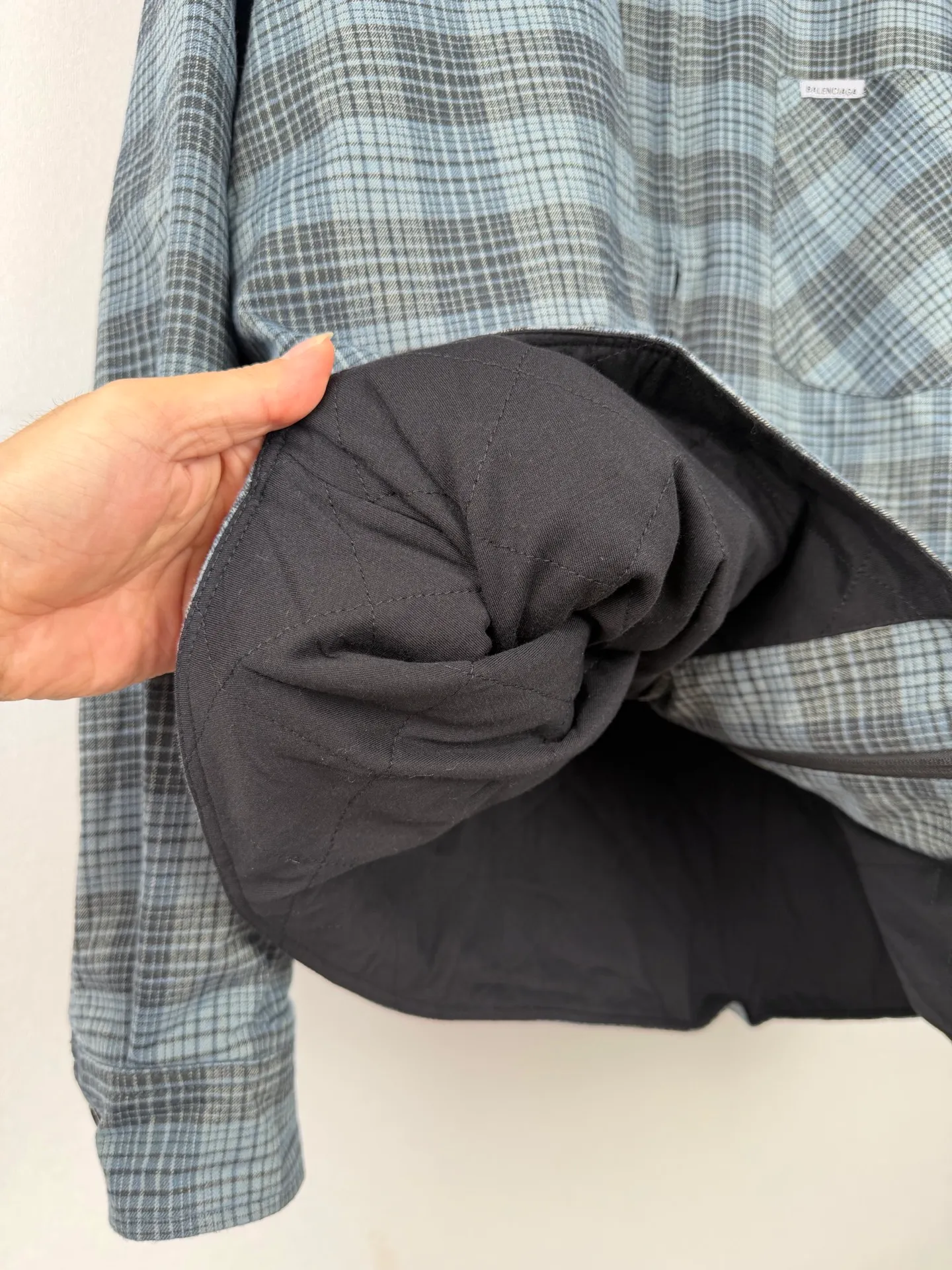
BALENCIAGA/balenciaga blue and gray plaid zipper pocket logo quilted jacket combines a three-layer structure of plaid woven fabric, filling cotton, and lining, and integrates plaid alignment technology and quilted garment production standards. There are multiple process difficulties in the whole process. The surface layer of the body is made of blue-gray Retro plaid fabric, and the cutting machine production strictly follows the global grid standards. The arrangement direction of the cutting pieces is fixed and cannot be changed at will. The horizontal and vertical lines of shoulder seams, side seams, and zipper placket joints must be consistent and coherent. The left chest patch pocket is cut independently, and the bag check pattern must be aligned with the front reference pattern. Slight deviations will destroy the visual integrity and directly increase fabric loss and cutting time. The most difficult part of the style is the three-layer composite sewing. The outer plaid fabric, filling cotton, and lining fabric have different physical properties, and the preshrinking processing parameters need to be adjusted separately. Pressure and temperature control are crucial during lamination operations. Once the parameters are out of balance, it can easily cause fabric stretch and distortion, plaid dislocation, and wrinkles and bulges in garments. At the same time, it is necessary to reasonably plan the quilting line to avoid the visual beauty of the grid pattern from being cut by the lines on the basis of firmly fixing the cotton layer and preventing cotton from running away. The placket adopts a centered zipper structure. It is difficult to sew the zipper tape and the quilted panels. It is required that the width of the left and right plackets be equal, the zipper routing is straight and smooth, and there is no lag in opening and closing. When the shirt lapel is filled with cotton, the thickness of the cotton needs to be controlled to prevent the collar from becoming bloated and unnaturally folded. The metal nameplate of the chest pocket is sewn at fixed points to avoid pulling the fabric during the operation and ensure that the plaid pattern is smooth and not deformed. The quilted material increases the overall thickness of the fabric. When sewing, you need to continuously adjust the presser foot pressure and stitch length to adapt to changes in sandwich thickness. The low-temperature and gentle ironing process is used for post-finishing to prevent the plaid from fading and the cotton layer from clumping due to high temperatures. From the precise alignment of cutting pieces, three-layer fabric pretreatment, composite quilting to garment finalization inspection, the processes are interlocking and the error tolerance rate is extremely low, testing the accuracy of plate making, equipment control and turning technology. Size:XS S M L
2026-10-29
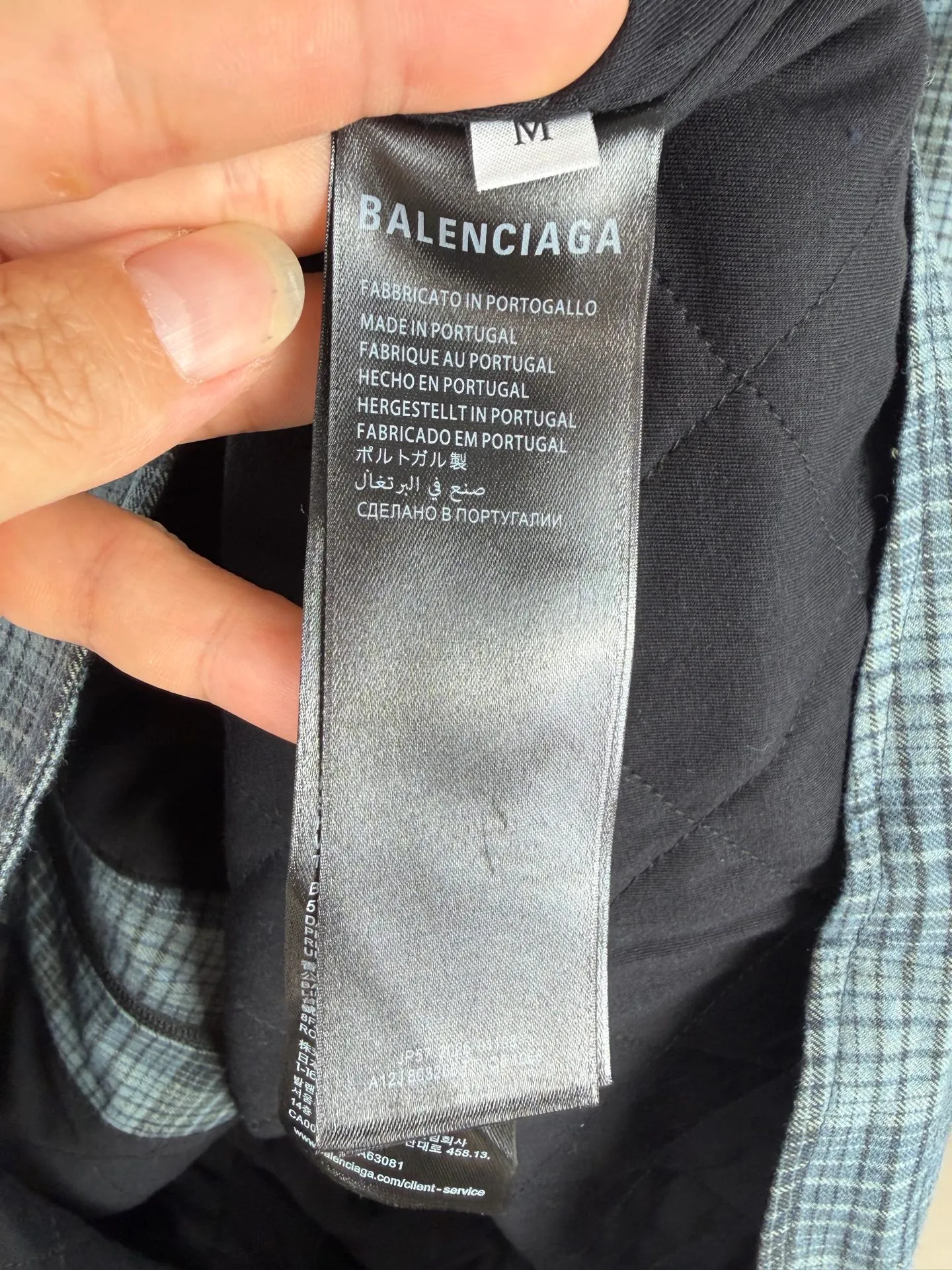
BALENCIAGA/balenciaga blue and gray plaid zipper pocket logo quilted jacket combines a three-layer structure of plaid woven fabric, filling cotton, and lining, and integrates plaid alignment technology and quilted garment production standards. There are multiple process difficulties in the whole process. The surface layer of the body is made of blue-gray Retro plaid fabric, and the cutting machine production strictly follows the global grid standards. The arrangement direction of the cutting pieces is fixed and cannot be changed at will. The horizontal and vertical lines of shoulder seams, side seams, and zipper placket joints must be consistent and coherent. The left chest patch pocket is cut independently, and the bag check pattern must be aligned with the front reference pattern. Slight deviations will destroy the visual integrity and directly increase fabric loss and cutting time. The most difficult part of the style is the three-layer composite sewing. The outer plaid fabric, filling cotton, and lining fabric have different physical properties, and the preshrinking processing parameters need to be adjusted separately. Pressure and temperature control are crucial during lamination operations. Once the parameters are out of balance, it can easily cause fabric stretch and distortion, plaid dislocation, and wrinkles and bulges in garments. At the same time, it is necessary to reasonably plan the quilting line to avoid the visual beauty of the grid pattern from being cut by the lines on the basis of firmly fixing the cotton layer and preventing cotton from running away. The placket adopts a centered zipper structure. It is difficult to sew the zipper tape and the quilted panels. It is required that the width of the left and right plackets be equal, the zipper routing is straight and smooth, and there is no lag in opening and closing. When the shirt lapel is filled with cotton, the thickness of the cotton needs to be controlled to prevent the collar from becoming bloated and unnaturally folded. The metal nameplate of the chest pocket is sewn at fixed points to avoid pulling the fabric during the operation and ensure that the plaid pattern is smooth and not deformed. The quilted material increases the overall thickness of the fabric. When sewing, you need to continuously adjust the presser foot pressure and stitch length to adapt to changes in sandwich thickness. The low-temperature and gentle ironing process is used for post-finishing to prevent the plaid from fading and the cotton layer from clumping due to high temperatures. From the precise alignment of cutting pieces, three-layer fabric pretreatment, composite quilting to garment finalization inspection, the processes are interlocking and the error tolerance rate is extremely low, testing the accuracy of plate making, equipment control and turning technology. Size:XS S M L
2026-10-29