Chinese supplier factory
exclusively supplying wholesalers, resellers, and retailers.
Click here to contact us
Scan QR Code

| Premium Select

BALENCIAGA/balenciaga plaid splicing fake two-piece denim jacket is deconstructed and spliced ​​with cotton plaid fabric and heavy denim fabric. It combines strict grid technology, fake two-piece composite structure and multiple washing and distressing treatments. The overall process complexity and production accuracy have reached Premium fashion-level standards. The process is complicated and the error tolerance rate is extremely low. The fabric uses a dual-material composite system. The outer layer is made of high-weight combed cotton denim, which has good stiffness and structural support. The inner layer is matched with high-density yarn-dyed plaid cotton fabric. The warp and weft yarns are arranged regularly and the color fastness is stable. The weight, elasticity, and shrinkage of the two fabrics are significantly different. Multiple pre-treatments such as pre-shrinking, shaping, and hair removal are required in the early stage to ensure that problems such as wrinkles, uneven shrinkage, and splicing misalignment will not occur during the later sewing and washing processes. The fabric preparation process alone is far superior to conventional single-fabric jackets. The core technical difficulty is focused on the precise grid alignment of the entire garment. From the lapels, plackets, chest pockets to cuffs and side seams, all splicing parts require the horizontal and vertical lines of the grid to be continuously aligned and symmetrical. At the cutting bed stage, manual positioning and typesetting and laser precision cutting are used. Each piece is independently calibrated to the grid position. Batch trimming is prohibited to ensure alignment accuracy. Detailed areas such as breast pockets and placket need to be individually tailored and aligned twice. The fabric loss rate and working time cost are doubled. Any millimeter-level deviation will lead to the scrapping of the cut pieces, which requires extremely high technician experience and equipment accuracy. The fake two-piece composite structure further increases the difficulty of production. The inner and outer double-layer independent panels are nested and sewn. The outer layer is in the shape of a Classic denim jacket, and the inner layer presents a plaid shirt-like visual effect. The collar, placket, hem, and cuffs all achieve double-layer natural overlapping. During production, the inner and outer layers of semi-finished products need to be completed separately, and then accurately aligned and stitched to control the size matching and movement margin of the two layers to avoid shifting, warping, and tightness between layers. The sewing process requires multiple manual positioning and fixings to take into account the layered appearance and wearing comfort. The sewing process follows high-standard fashion standards, using professional techniques such as buried clips, double-thread lockstitching, and reinforced backstitching. Button positioning and chest pocket sewing need to be calibrated before installation. The loose shoulder design is combined with three-dimensional tailoring. The shoulder line and armholes are pulled back to enhance the stiffness of the version. The stitches throughout the garment are even and dense, the seams are smooth and wrinkle-free, the hardware accessories are installed firmly and neatly, and the details are handled rigorously. The washing process adopts a multiple compound distressing system, combining enzyme washing, sand washing, light horse washing and garment styling washing, and manual assisted partial whitening to create a natural retro texture. At the same time, the shrinkage of the inner and outer layers of fabrics is strictly controlled to prevent deformation, plaid shift and uneven color after washing. Each washing process requires manual control of intensity and duration, making it impossible to fully standardize mass production. The final product has both aged texture and pattern stability. The entire jacket has gone through dozens of processes, integrating high-precision grid alignment, complex structural splicing, and multiple washes and distressing. The process chain is long, there are many control points, and there is very little room for error. It fully reflects the ultimate complexity of Premium fashion in material matching, structural design, and craftsmanship. Size:XS S M L
14
BALENCIAGA/balenciaga plaid splicing fake two-piece denim jacket is deconstructed and spliced ​​with cotton plaid fabric and heavy denim fabric. It combines strict grid technology, fake two-piece composite structure and multiple washing and distressing treatments. The overall process complexity and production accuracy have reached Premium fashion-level standards. The process is complicated and the error tolerance rate is extremely low. The fabric uses a dual-material composite system. The outer layer is made of high-weight combed cotton denim, which has good stiffness and structural support. The inner layer is matched with high-density yarn-dyed plaid cotton fabric. The warp and weft yarns are arranged regularly and the color fastness is stable. The weight, elasticity, and shrinkage of the two fabrics are significantly different. Multiple pre-treatments such as pre-shrinking, shaping, and hair removal are required in the early stage to ensure that problems such as wrinkles, uneven shrinkage, and splicing misalignment will not occur during the later sewing and washing processes. The fabric preparation process alone is far superior to conventional single-fabric jackets. The core technical difficulty is focused on the precise grid alignment of the entire garment. From the lapels, plackets, chest pockets to cuffs and side seams, all splicing parts require the horizontal and vertical lines of the grid to be continuously aligned and symmetrical. At the cutting bed stage, manual positioning and typesetting and laser precision cutting are used. Each piece is independently calibrated to the grid position. Batch trimming is prohibited to ensure alignment accuracy. Detailed areas such as breast pockets and placket need to be individually tailored and aligned twice. The fabric loss rate and working time cost are doubled. Any millimeter-level deviation will lead to the scrapping of the cut pieces, which requires extremely high technician experience and equipment accuracy. The fake two-piece composite structure further increases the difficulty of production. The inner and outer double-layer independent panels are nested and sewn. The outer layer is in the shape of a Classic denim jacket, and the inner layer presents a plaid shirt-like visual effect. The collar, placket, hem, and cuffs all achieve double-layer natural overlapping. During production, the inner and outer layers of semi-finished products need to be completed separately, and then accurately aligned and stitched to control the size matching and movement margin of the two layers to avoid shifting, warping, and tightness between layers. The sewing process requires multiple manual positioning and fixings to take into account the layered appearance and wearing comfort. The sewing process follows high-standard fashion standards, using professional techniques such as buried clips, double-thread lockstitching, and reinforced backstitching. Button positioning and chest pocket sewing need to be calibrated before installation. The loose shoulder design is combined with three-dimensional tailoring. The shoulder line and armholes are pulled back to enhance the stiffness of the version. The stitches throughout the garment are even and dense, the seams are smooth and wrinkle-free, the hardware accessories are installed firmly and neatly, and the details are handled rigorously. The washing process adopts a multiple compound distressing system, combining enzyme washing, sand washing, light horse washing and garment styling washing, and manual assisted partial whitening to create a natural retro texture. At the same time, the shrinkage of the inner and outer layers of fabrics is strictly controlled to prevent deformation, plaid shift and uneven color after washing. Each washing process requires manual control of intensity and duration, making it impossible to fully standardize mass production. The final product has both aged texture and pattern stability. The entire jacket has gone through dozens of processes, integrating high-precision grid alignment, complex structural splicing, and multiple washes and distressing. The process chain is long, there are many control points, and there is very little room for error. It fully reflects the ultimate complexity of Premium fashion in material matching, structural design, and craftsmanship. Size:XS S M L
2026-10-29
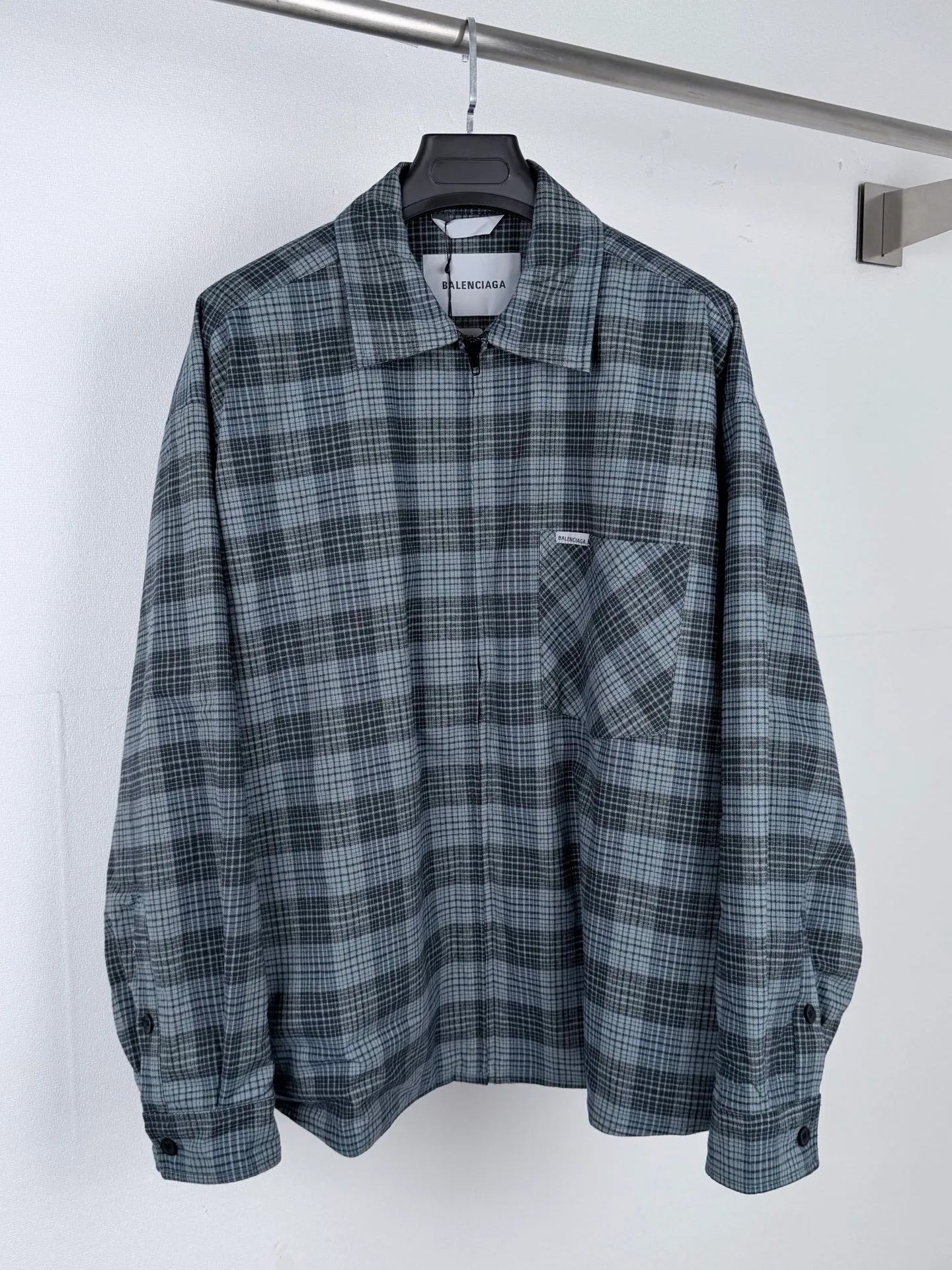
BALENCIAGA/balenciaga blue and gray plaid zipper pocket logo quilted jacket combines a three-layer structure of plaid woven fabric, filling cotton, and lining, and integrates plaid alignment technology and quilted garment production standards. There are multiple process difficulties in the whole process. The surface layer of the body is made of blue-gray Retro plaid fabric, and the cutting machine production strictly follows the global grid standards. The arrangement direction of the cutting pieces is fixed and cannot be changed at will. The horizontal and vertical lines of shoulder seams, side seams, and zipper placket joints must be consistent and coherent. The left chest patch pocket is cut independently, and the bag check pattern must be aligned with the front reference pattern. Slight deviations will destroy the visual integrity and directly increase fabric loss and cutting time. The most difficult part of the style is the three-layer composite sewing. The outer plaid fabric, filling cotton, and lining fabric have different physical properties, and the preshrinking processing parameters need to be adjusted separately. Pressure and temperature control are crucial during lamination operations. Once the parameters are out of balance, it can easily cause fabric stretch and distortion, plaid dislocation, and wrinkles and bulges in garments. At the same time, it is necessary to reasonably plan the quilting line to avoid the visual beauty of the grid pattern from being cut by the lines on the basis of firmly fixing the cotton layer and preventing cotton from running away. The placket adopts a centered zipper structure. It is difficult to sew the zipper tape and the quilted panels. It is required that the width of the left and right plackets be equal, the zipper routing is straight and smooth, and there is no lag in opening and closing. When the shirt lapel is filled with cotton, the thickness of the cotton needs to be controlled to prevent the collar from becoming bloated and unnaturally folded. The metal nameplate of the chest pocket is sewn at fixed points to avoid pulling the fabric during the operation and ensure that the plaid pattern is smooth and not deformed. The quilted material increases the overall thickness of the fabric. When sewing, you need to continuously adjust the presser foot pressure and stitch length to adapt to changes in sandwich thickness. The low-temperature and gentle ironing process is used for post-finishing to prevent the plaid from fading and the cotton layer from clumping due to high temperatures. From the precise alignment of cutting pieces, three-layer fabric pretreatment, composite quilting to garment finalization inspection, the processes are interlocking and the error tolerance rate is extremely low, testing the accuracy of plate making, equipment control and turning technology. Size:XS S M L
13
BALENCIAGA/balenciaga blue and gray plaid zipper pocket logo quilted jacket combines a three-layer structure of plaid woven fabric, filling cotton, and lining, and integrates plaid alignment technology and quilted garment production standards. There are multiple process difficulties in the whole process. The surface layer of the body is made of blue-gray Retro plaid fabric, and the cutting machine production strictly follows the global grid standards. The arrangement direction of the cutting pieces is fixed and cannot be changed at will. The horizontal and vertical lines of shoulder seams, side seams, and zipper placket joints must be consistent and coherent. The left chest patch pocket is cut independently, and the bag check pattern must be aligned with the front reference pattern. Slight deviations will destroy the visual integrity and directly increase fabric loss and cutting time. The most difficult part of the style is the three-layer composite sewing. The outer plaid fabric, filling cotton, and lining fabric have different physical properties, and the preshrinking processing parameters need to be adjusted separately. Pressure and temperature control are crucial during lamination operations. Once the parameters are out of balance, it can easily cause fabric stretch and distortion, plaid dislocation, and wrinkles and bulges in garments. At the same time, it is necessary to reasonably plan the quilting line to avoid the visual beauty of the grid pattern from being cut by the lines on the basis of firmly fixing the cotton layer and preventing cotton from running away. The placket adopts a centered zipper structure. It is difficult to sew the zipper tape and the quilted panels. It is required that the width of the left and right plackets be equal, the zipper routing is straight and smooth, and there is no lag in opening and closing. When the shirt lapel is filled with cotton, the thickness of the cotton needs to be controlled to prevent the collar from becoming bloated and unnaturally folded. The metal nameplate of the chest pocket is sewn at fixed points to avoid pulling the fabric during the operation and ensure that the plaid pattern is smooth and not deformed. The quilted material increases the overall thickness of the fabric. When sewing, you need to continuously adjust the presser foot pressure and stitch length to adapt to changes in sandwich thickness. The low-temperature and gentle ironing process is used for post-finishing to prevent the plaid from fading and the cotton layer from clumping due to high temperatures. From the precise alignment of cutting pieces, three-layer fabric pretreatment, composite quilting to garment finalization inspection, the processes are interlocking and the error tolerance rate is extremely low, testing the accuracy of plate making, equipment control and turning technology. Size:XS S M L
2026-10-29
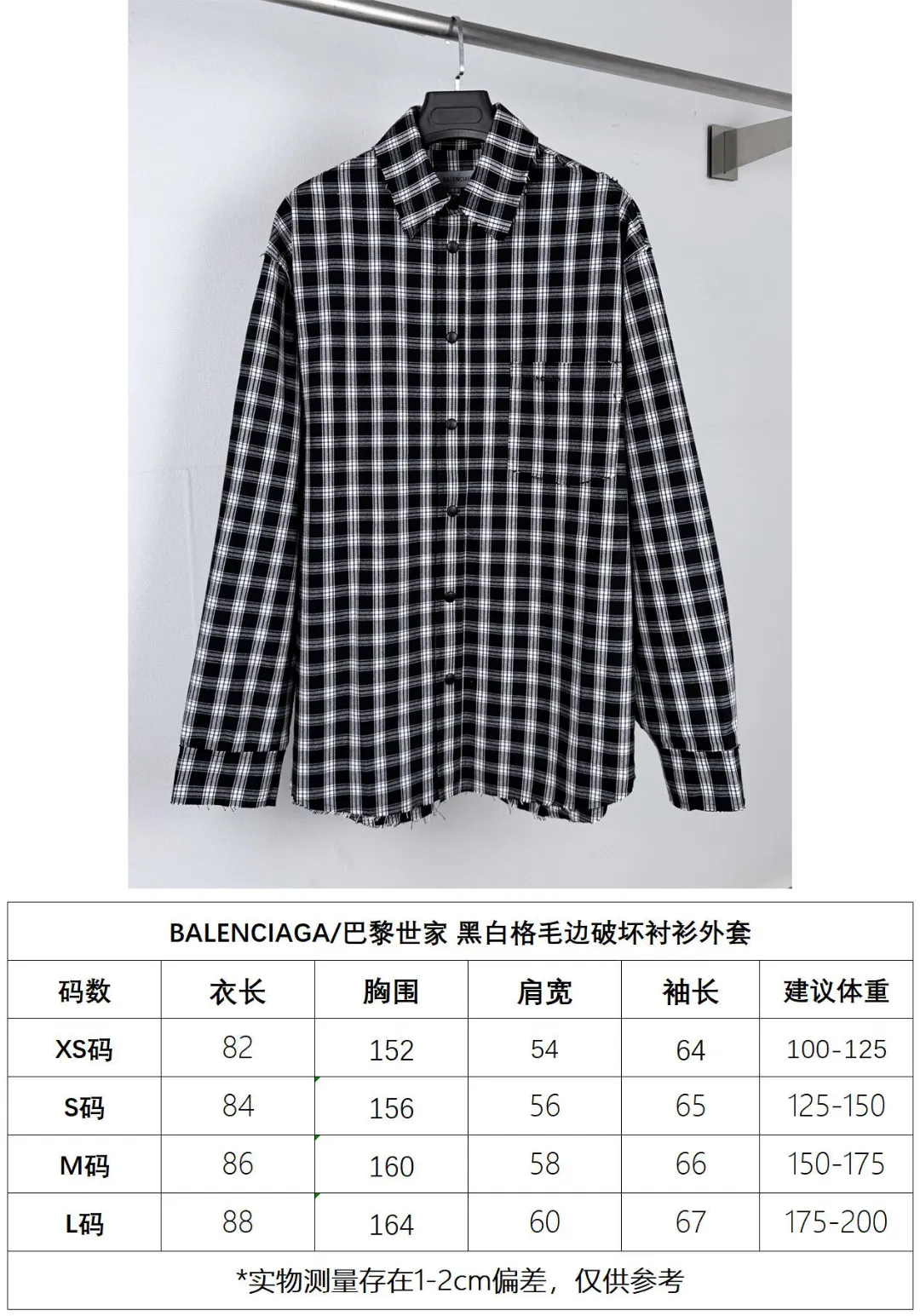
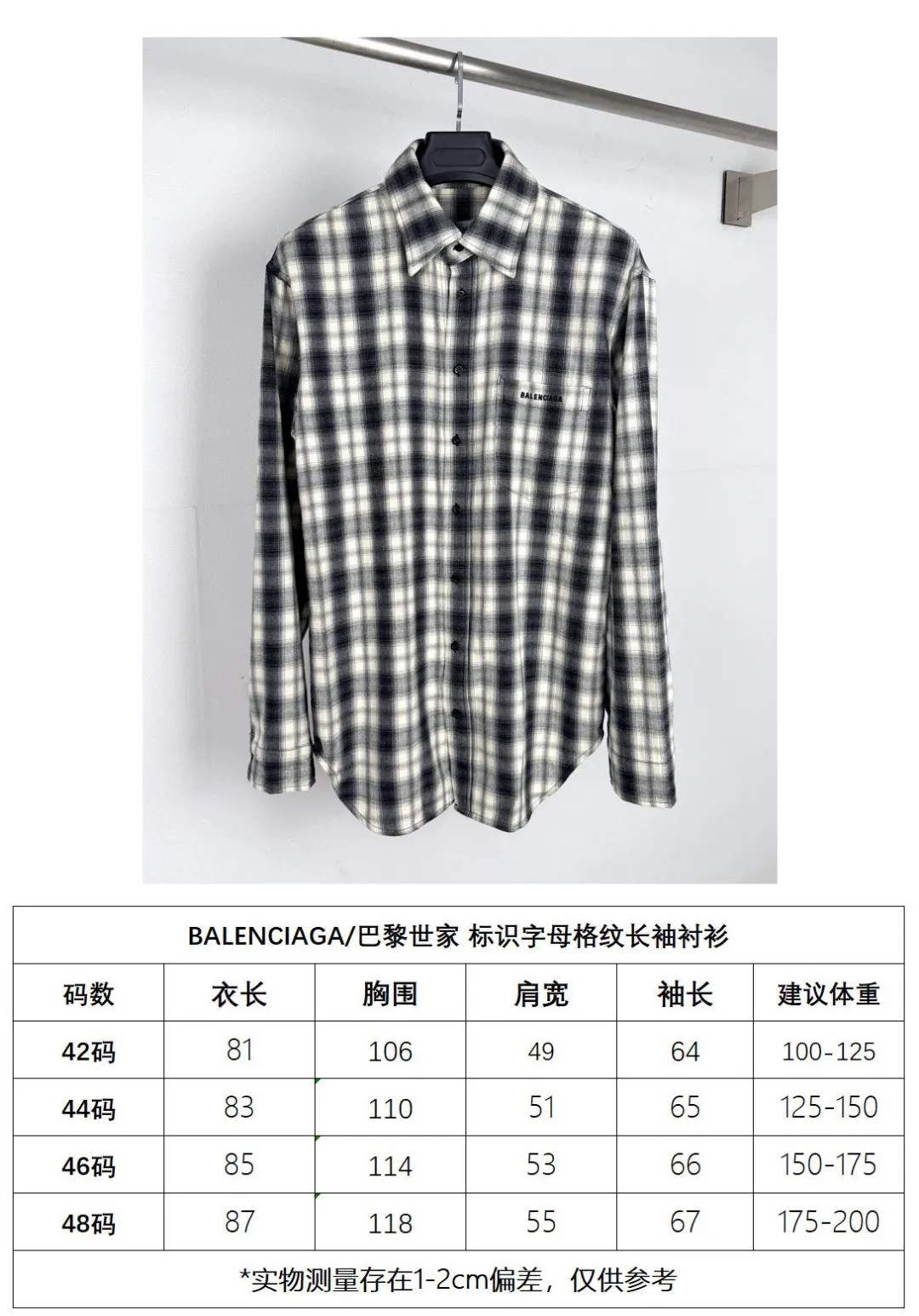
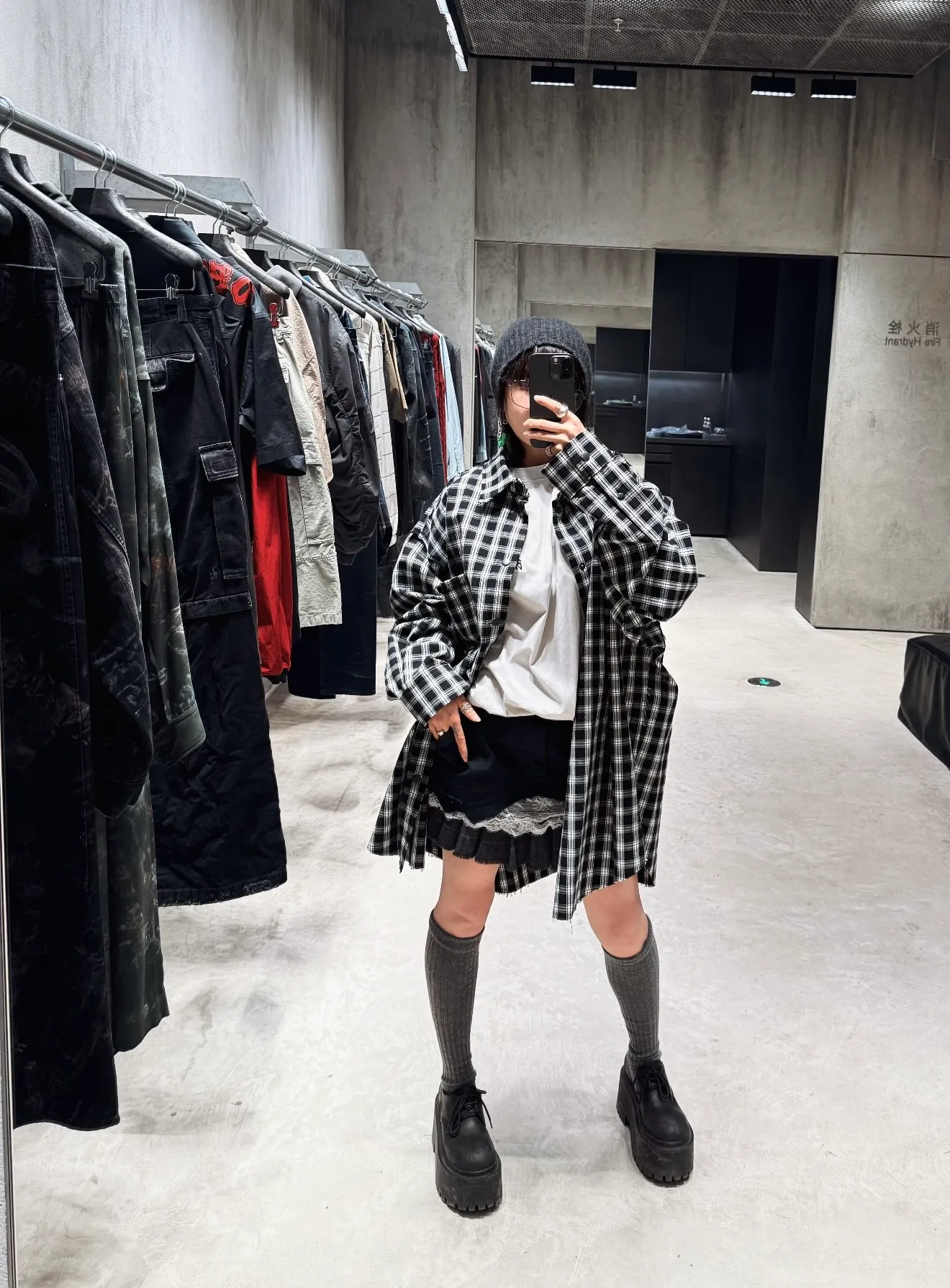
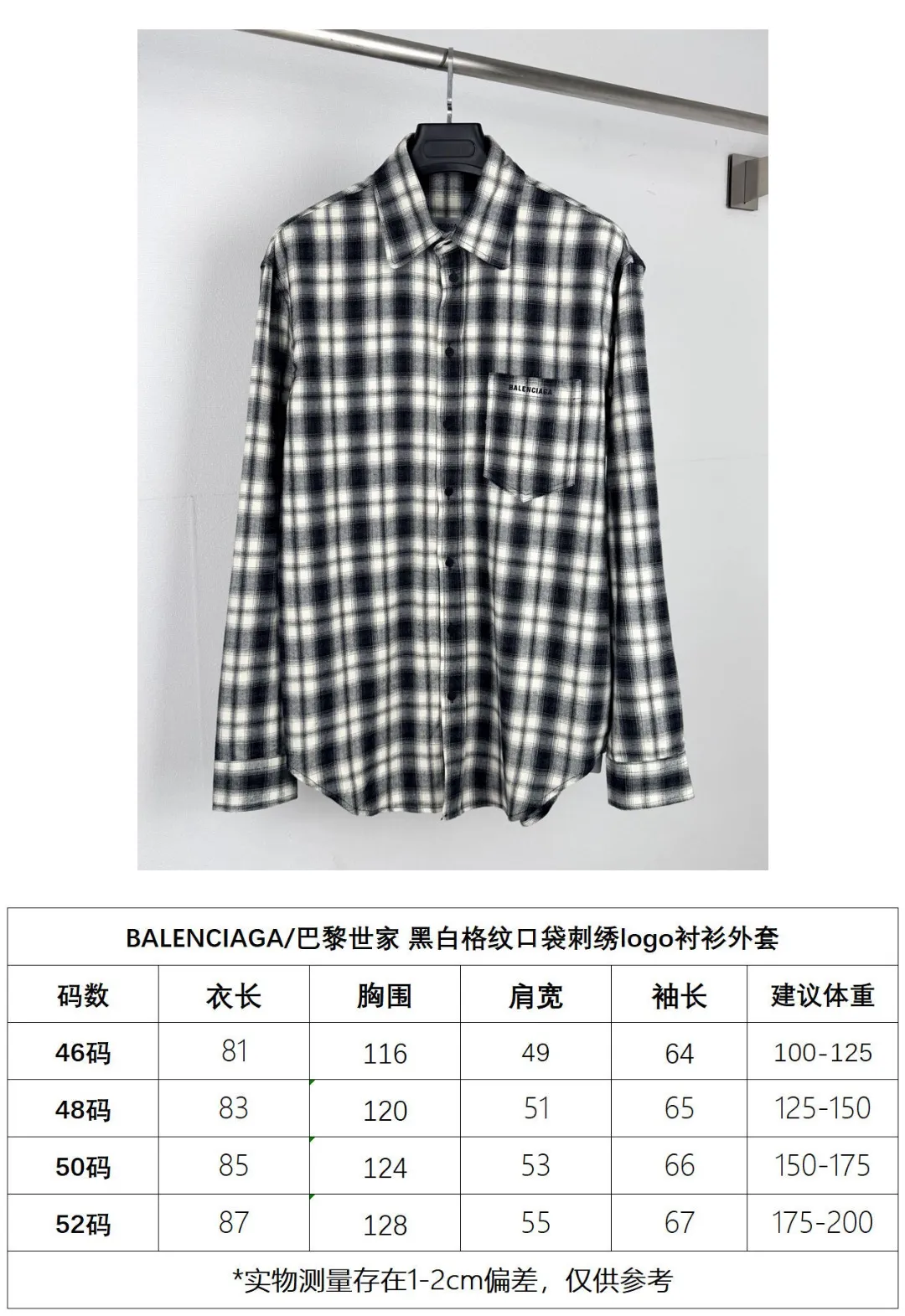
BALENCIAGA/balenciaga Black White plaid raw edge damaged shirt jacket From cutting planning to garment finishing, the entire production chain process is cumbersome, and multiple process difficulties pose a severe test to production accuracy. The fabric adopts a yarn-dyed weaving process in which the yarn is dyed first and then weaved. The Black and White checkered texture penetrates the fabric fibers, so there is no hidden danger of the surface printing falling off, and it also increases the difficulty of tailoring. Ready-made garments implement global alignment standards, and the independent cuts of the front and rear body, left and right sleeves, and front chest patch pockets all need to be aligned and aligned. The cutting bed relies on infrared positioning to precisely lay out materials. In order to meet the grid alignment requirements, a large amount of fabric loss will be generated. As long as the plaid deviation occurs, the cut piece will be deemed scrapped. The raw material loss is much higher than that of ordinary unpatterned shirts. The Classic lapel component of the body also follows the grid specification, and the collar surface and collar bottom lines are consistent. The collar seat curvature has been adjusted multiple times to avoid warping and deformation of the lapel when worn. The key point of the process is to attach the same material to the front chest pocket. The plaid pattern of the bag piece must naturally continue with the pattern of the front panel. The sewing machine must continuously control the alignment reference when sewing to prevent the bag body from being skewed and the lines from being broken. The placket is equipped with a matte metal four-button buckle, the spacing of the buckles is standardized, and the new door routing is even and dense, taking into account the uniform appearance and long-term wearing stability. The product's iconic hem burr destruction process cannot rely on standardized mass production by machines. Instead, it relies on fine manual tearing to accurately control the length and density of the burrs to create a casual Retro destroyed texture. Process control requires that excessive tearing cause large areas of yarn detachment and local hole imbalance, which tests the practical experience of workers. After the garments are sewn, they enter the pre-shrinking and washing process to release the internal stress generated by fabric weaving and reduce the risk of shrinkage and plaid distortion during subsequent wearing. After a complete process of sewing, manual destruction, washing, shaping and ironing, and multi-layer quality inspection, any wiring defects, plaid misalignment, and uneven burrs will be screened out. Multiple processes are constrained layer by layer to achieve the integration of silhouette, fabric texture and retro destruction details, balancing street aesthetics and durability of garments. Size:XS S M L
13
BALENCIAGA/balenciaga Black White plaid raw edge damaged shirt jacket From cutting planning to garment finishing, the entire production chain process is cumbersome, and multiple process difficulties pose a severe test to production accuracy. The fabric adopts a yarn-dyed weaving process in which the yarn is dyed first and then weaved. The Black and White checkered texture penetrates the fabric fibers, so there is no hidden danger of the surface printing falling off, and it also increases the difficulty of tailoring. Ready-made garments implement global alignment standards, and the independent cuts of the front and rear body, left and right sleeves, and front chest patch pockets all need to be aligned and aligned. The cutting bed relies on infrared positioning to precisely lay out materials. In order to meet the grid alignment requirements, a large amount of fabric loss will be generated. As long as the plaid deviation occurs, the cut piece will be deemed scrapped. The raw material loss is much higher than that of ordinary unpatterned shirts. The Classic lapel component of the body also follows the grid specification, and the collar surface and collar bottom lines are consistent. The collar seat curvature has been adjusted multiple times to avoid warping and deformation of the lapel when worn. The key point of the process is to attach the same material to the front chest pocket. The plaid pattern of the bag piece must naturally continue with the pattern of the front panel. The sewing machine must continuously control the alignment reference when sewing to prevent the bag body from being skewed and the lines from being broken. The placket is equipped with a matte metal four-button buckle, the spacing of the buckles is standardized, and the new door routing is even and dense, taking into account the uniform appearance and long-term wearing stability. The product's iconic hem burr destruction process cannot rely on standardized mass production by machines. Instead, it relies on fine manual tearing to accurately control the length and density of the burrs to create a casual Retro destroyed texture. Process control requires that excessive tearing cause large areas of yarn detachment and local hole imbalance, which tests the practical experience of workers. After the garments are sewn, they enter the pre-shrinking and washing process to release the internal stress generated by fabric weaving and reduce the risk of shrinkage and plaid distortion during subsequent wearing. After a complete process of sewing, manual destruction, washing, shaping and ironing, and multi-layer quality inspection, any wiring defects, plaid misalignment, and uneven burrs will be screened out. Multiple processes are constrained layer by layer to achieve the integration of silhouette, fabric texture and retro destruction details, balancing street aesthetics and durability of garments. Size:XS S M L
2026-10-29
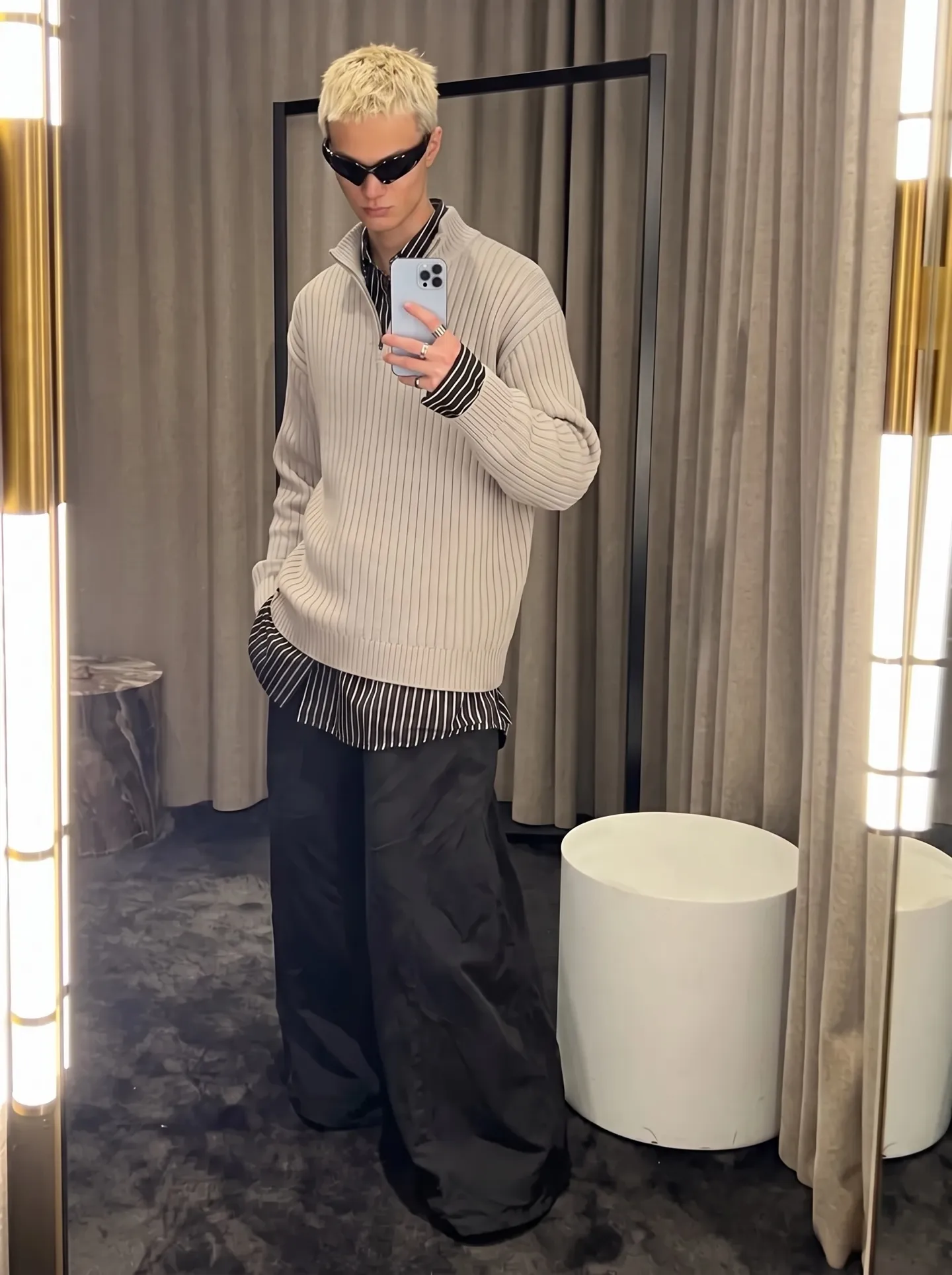
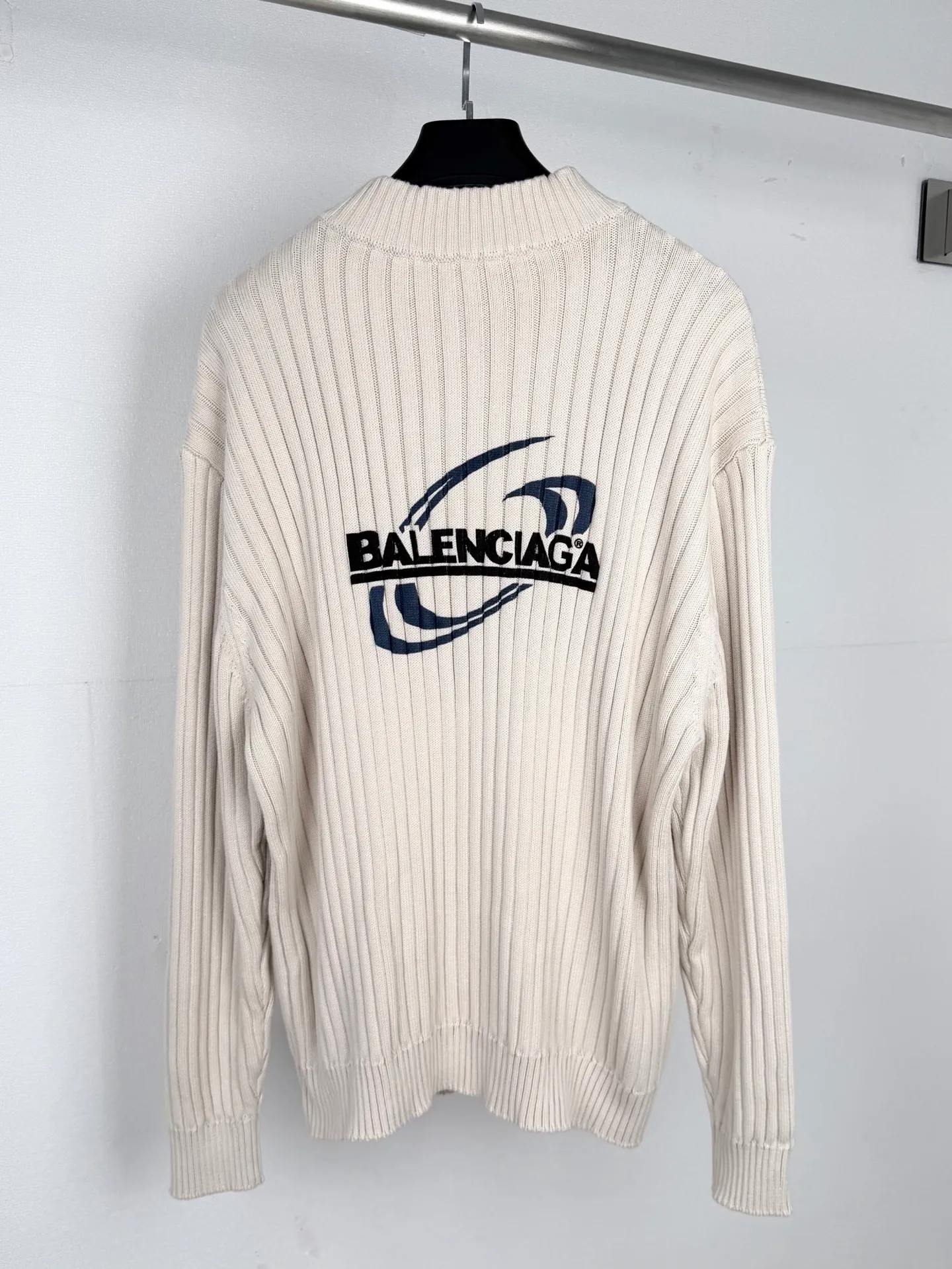
BALENCIAGA/Balenciaga Cola Wave Half-Zip Pit Knitted Sweater Ready-made garments are made of longitudinal pit texture knitted gray fabric. The weaving stage has high standards for yarn tension and machine yarn feeding speed. The width of the vertical grooves and the concave and convex texture of the entire body of the garment must be highly uniform. The production process is prone to defects such as texture deviation and density gaps, and the gray fabric screening loss is large. After the gray fabric is off the machine, it is pre-shrunk and heat-set to release the potential shrinkage of the fabric in advance and prevent the subsequent distortion and size deformation of the finished garments in the washing water. The body of the garment is equipped with a half-zip stand-up collar structure. The collar ribs and body pit stripes require vertical alignment, and the splicing process requires precise alignment of the texture direction. The zipper welt uses a blind-stitching process to ensure smooth opening and closing of the zipper and avoid local vertical grain stretch deformation caused by sewing pull. Sewing workers need to continuously control the fabric feeding tension to balance the elasticity of the fabric and the stability of the threading. Drop-shoulder silhouette pieces are cut strictly along the pitted texture to prevent diagonal cuts from damaging the fabric texture. The printing of the wave monogram on the back is the core technical difficulty of this model. The surface of the concave and convex pit fabric is undulating and cannot be printed directly like flat fabrics. During production, the tension of the printing area is first fixed and leveled, and the layered alignment offset printing process is used to complete the printing of wave graphics and letter logos in sequence. Multi-layer pattern overprinting requires extremely high precision, and it is easy to produce ghosting and misalignment defects. The ink ratio has been adjusted to take into account the fullness of the pattern and ensure that the printing is not prone to cracking and falling off when the fabric is stretched. The cuffs and hem ribs are woven from pitted fabrics of the same system, and the elastic density matches the body parameters to avoid problems with elasticity imbalance and wavy edges after wearing. After the garments are sewn, detailed inspection is carried out to screen for sewing defects and printing defects. Finally, the low-temperature wet finishing process is used to uniformly correct the pattern and texture flatness. From knitting and weaving, precision cutting, structural sewing, multi-layer overprinting to garment styling, the process chain is complicated. Failure to control any process standard will directly affect the overall look and feel of the garment. Size:XS S M L
11
BALENCIAGA/Balenciaga Cola Wave Half-Zip Pit Knitted Sweater Ready-made garments are made of longitudinal pit texture knitted gray fabric. The weaving stage has high standards for yarn tension and machine yarn feeding speed. The width of the vertical grooves and the concave and convex texture of the entire body of the garment must be highly uniform. The production process is prone to defects such as texture deviation and density gaps, and the gray fabric screening loss is large. After the gray fabric is off the machine, it is pre-shrunk and heat-set to release the potential shrinkage of the fabric in advance and prevent the subsequent distortion and size deformation of the finished garments in the washing water. The body of the garment is equipped with a half-zip stand-up collar structure. The collar ribs and body pit stripes require vertical alignment, and the splicing process requires precise alignment of the texture direction. The zipper welt uses a blind-stitching process to ensure smooth opening and closing of the zipper and avoid local vertical grain stretch deformation caused by sewing pull. Sewing workers need to continuously control the fabric feeding tension to balance the elasticity of the fabric and the stability of the threading. Drop-shoulder silhouette pieces are cut strictly along the pitted texture to prevent diagonal cuts from damaging the fabric texture. The printing of the wave monogram on the back is the core technical difficulty of this model. The surface of the concave and convex pit fabric is undulating and cannot be printed directly like flat fabrics. During production, the tension of the printing area is first fixed and leveled, and the layered alignment offset printing process is used to complete the printing of wave graphics and letter logos in sequence. Multi-layer pattern overprinting requires extremely high precision, and it is easy to produce ghosting and misalignment defects. The ink ratio has been adjusted to take into account the fullness of the pattern and ensure that the printing is not prone to cracking and falling off when the fabric is stretched. The cuffs and hem ribs are woven from pitted fabrics of the same system, and the elastic density matches the body parameters to avoid problems with elasticity imbalance and wavy edges after wearing. After the garments are sewn, detailed inspection is carried out to screen for sewing defects and printing defects. Finally, the low-temperature wet finishing process is used to uniformly correct the pattern and texture flatness. From knitting and weaving, precision cutting, structural sewing, multi-layer overprinting to garment styling, the process chain is complicated. Failure to control any process standard will directly affect the overall look and feel of the garment. Size:XS S M L
2026-10-29
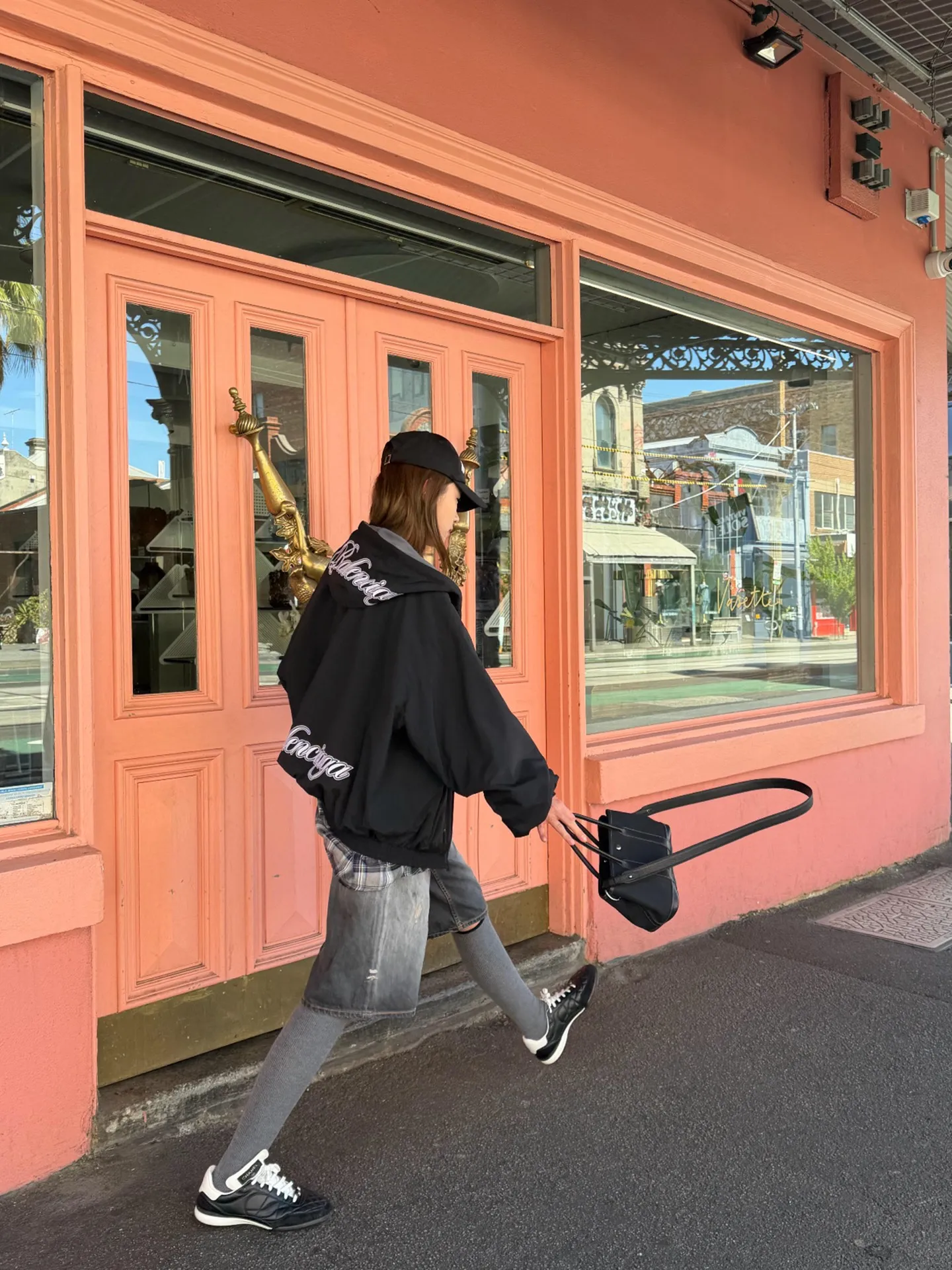
BALENCIAGA / Balenciaga 26SS black and gray reversible ring logo stand-up collar down jacket. This reversible stand-up collar down jacket combines a dual-version appearance with a 90 white duck down lining. One side presents a simple and elegant Black down bread silhouette, and the other side has gray and wine red contrasting panels for a sporty style. Both sides can be worn independently. The craftsmanship is far more complex than ordinary single-sided down garments. In the pattern making and development stage, it is necessary to complete the simultaneous calibration of the two plates. The shoulder slope, armhole arc, zipper placket, and hem elastic point of the front and back sides must be perfectly matched. Once there is a slight deviation in the positioning of the cutting pieces, it will lead to misalignment of the pattern and unbalanced length of the garment when worn on both sides. The down side adopts a horizontal segmented compartment design and is filled with high-quality 90 white duck down. The amount of down filling in each down compartment is accurately weighed and distributed to ensure that the down is evenly distributed and avoid local accumulation or gaps of down material. The fabric is made of high-density anti-drilling down base to minimize the risk of down escaping. The brand logo on the left chest adopts fine thermal transfer printing technology, and the positioning and color number have been reviewed and debugged many times. The body is equipped with a special two-way zipper on both sides, which can be opened and closed smoothly on both sides. The placket adopts a sandwich hidden hemming process, and all sewing lines are stored on the inside of the sandwich. There are no unnecessary exposed stitches on both sides, ensuring a clean and neat appearance. The welt pockets on both sides have an interconnected double-sided structure. The three layers of fabric are aligned simultaneously during sewing. The pocket opening cannot leave stitches on either side that would damage the look and feel. The cuffs and hem adopt hidden elastic hemming technology, and the elastic bands are completely wrapped in the interlayer. There are no traces of elastic bands on the front and back, taking into account windproofness, temperature locking and beautiful lines. The sewing production process is extremely difficult. The sewing operation requires penetrating three layers of outer fabric, 90 fleece liner, and reverse woven fabric at one time. Turners have extremely high requirements for controlling the tightness of stitches. If the stitching is too heavy, it will compress the down bin, damage the down structure, and reduce the warmth retention performance; if the stitching is too loose, it is easy to cause jumpers and down drilling problems. Multiple special-shaped pieces in the contrasting area on the back are spliced ​​with White welts, and the dividing seams must be accurately aligned with the Black side seams. After the garment is sewn, the two facades need to be shaped and ironed separately. One side is baked to give the fluffy and full texture of the down, and the other side is calibrated to make the contrasting color dividing lines straight. The entire production process implements double quality inspection standards, which takes longer, and ultimately allows one piece of clothing to unlock two styles. Size:XS S M L
11
BALENCIAGA / Balenciaga 26SS black and gray reversible ring logo stand-up collar down jacket. This reversible stand-up collar down jacket combines a dual-version appearance with a 90 white duck down lining. One side presents a simple and elegant Black down bread silhouette, and the other side has gray and wine red contrasting panels for a sporty style. Both sides can be worn independently. The craftsmanship is far more complex than ordinary single-sided down garments. In the pattern making and development stage, it is necessary to complete the simultaneous calibration of the two plates. The shoulder slope, armhole arc, zipper placket, and hem elastic point of the front and back sides must be perfectly matched. Once there is a slight deviation in the positioning of the cutting pieces, it will lead to misalignment of the pattern and unbalanced length of the garment when worn on both sides. The down side adopts a horizontal segmented compartment design and is filled with high-quality 90 white duck down. The amount of down filling in each down compartment is accurately weighed and distributed to ensure that the down is evenly distributed and avoid local accumulation or gaps of down material. The fabric is made of high-density anti-drilling down base to minimize the risk of down escaping. The brand logo on the left chest adopts fine thermal transfer printing technology, and the positioning and color number have been reviewed and debugged many times. The body is equipped with a special two-way zipper on both sides, which can be opened and closed smoothly on both sides. The placket adopts a sandwich hidden hemming process, and all sewing lines are stored on the inside of the sandwich. There are no unnecessary exposed stitches on both sides, ensuring a clean and neat appearance. The welt pockets on both sides have an interconnected double-sided structure. The three layers of fabric are aligned simultaneously during sewing. The pocket opening cannot leave stitches on either side that would damage the look and feel. The cuffs and hem adopt hidden elastic hemming technology, and the elastic bands are completely wrapped in the interlayer. There are no traces of elastic bands on the front and back, taking into account windproofness, temperature locking and beautiful lines. The sewing production process is extremely difficult. The sewing operation requires penetrating three layers of outer fabric, 90 fleece liner, and reverse woven fabric at one time. Turners have extremely high requirements for controlling the tightness of stitches. If the stitching is too heavy, it will compress the down bin, damage the down structure, and reduce the warmth retention performance; if the stitching is too loose, it is easy to cause jumpers and down drilling problems. Multiple special-shaped pieces in the contrasting area on the back are spliced ​​with White welts, and the dividing seams must be accurately aligned with the Black side seams. After the garment is sewn, the two facades need to be shaped and ironed separately. One side is baked to give the fluffy and full texture of the down, and the other side is calibrated to make the contrasting color dividing lines straight. The entire production process implements double quality inspection standards, which takes longer, and ultimately allows one piece of clothing to unlock two styles. Size:XS S M L
2026-10-29
BALENCIAGA / Balenciaga 26SS black and gray reversible ring logo stand-up collar down jacket. This reversible stand-up collar down jacket combines a dual-version appearance with a 90 white duck down lining. One side presents a simple and elegant Black down bread silhouette, and the other side has gray and wine red contrasting panels for a sporty style. Both sides can be worn independently. The craftsmanship is far more complex than ordinary single-sided down garments. In the pattern making and development stage, it is necessary to complete the simultaneous calibration of the two plates. The shoulder slope, armhole arc, zipper placket, and hem elastic point of the front and back sides must be perfectly matched. Once there is a slight deviation in the positioning of the cutting pieces, it will lead to misalignment of the pattern and unbalanced length of the garment when worn on both sides. The down side adopts a horizontal segmented compartment design and is filled with high-quality 90 white duck down. The amount of down filling in each down compartment is accurately weighed and distributed to ensure that the down is evenly distributed and avoid local accumulation or gaps of down material. The fabric is made of high-density anti-drilling down base to minimize the risk of down escaping. The brand logo on the left chest adopts fine thermal transfer printing technology, and the positioning and color number have been reviewed and debugged many times. The body is equipped with a special two-way zipper on both sides, which can be opened and closed smoothly on both sides. The placket adopts a sandwich hidden hemming process, and all sewing lines are stored on the inside of the sandwich. There are no unnecessary exposed stitches on both sides, ensuring a clean and neat appearance. The welt pockets on both sides have an interconnected double-sided structure. The three layers of fabric are aligned simultaneously during sewing. The pocket opening cannot leave stitches on either side that would damage the look and feel. The cuffs and hem adopt hidden elastic hemming technology, and the elastic bands are completely wrapped in the interlayer. There are no traces of elastic bands on the front and back, taking into account windproofness, temperature locking and beautiful lines. The sewing production process is extremely difficult. The sewing operation requires penetrating three layers of outer fabric, 90 fleece liner, and reverse woven fabric at one time. Turners have extremely high requirements for controlling the tightness of stitches. If the stitching is too heavy, it will compress the down bin, damage the down structure, and reduce the warmth retention performance; if the stitching is too loose, it is easy to cause jumpers and down drilling problems. Multiple special-shaped pieces in the contrasting area on the back are spliced ​​with White welts, and the dividing seams must be accurately aligned with the Black side seams. After the garment is sewn, the two facades need to be shaped and ironed separately. One side is baked to give the fluffy and full texture of the down, and the other side is calibrated to make the contrasting color dividing lines straight. The entire production process implements double quality inspection standards, which takes longer, and ultimately allows one piece of clothing to unlock two styles. Size:XS S M L
10
BALENCIAGA / Balenciaga 26SS black and gray reversible ring logo stand-up collar down jacket. This reversible stand-up collar down jacket combines a dual-version appearance with a 90 white duck down lining. One side presents a simple and elegant Black down bread silhouette, and the other side has gray and wine red contrasting panels for a sporty style. Both sides can be worn independently. The craftsmanship is far more complex than ordinary single-sided down garments. In the pattern making and development stage, it is necessary to complete the simultaneous calibration of the two plates. The shoulder slope, armhole arc, zipper placket, and hem elastic point of the front and back sides must be perfectly matched. Once there is a slight deviation in the positioning of the cutting pieces, it will lead to misalignment of the pattern and unbalanced length of the garment when worn on both sides. The down side adopts a horizontal segmented compartment design and is filled with high-quality 90 white duck down. The amount of down filling in each down compartment is accurately weighed and distributed to ensure that the down is evenly distributed and avoid local accumulation or gaps of down material. The fabric is made of high-density anti-drilling down base to minimize the risk of down escaping. The brand logo on the left chest adopts fine thermal transfer printing technology, and the positioning and color number have been reviewed and debugged many times. The body is equipped with a special two-way zipper on both sides, which can be opened and closed smoothly on both sides. The placket adopts a sandwich hidden hemming process, and all sewing lines are stored on the inside of the sandwich. There are no unnecessary exposed stitches on both sides, ensuring a clean and neat appearance. The welt pockets on both sides have an interconnected double-sided structure. The three layers of fabric are aligned simultaneously during sewing. The pocket opening cannot leave stitches on either side that would damage the look and feel. The cuffs and hem adopt hidden elastic hemming technology, and the elastic bands are completely wrapped in the interlayer. There are no traces of elastic bands on the front and back, taking into account windproofness, temperature locking and beautiful lines. The sewing production process is extremely difficult. The sewing operation requires penetrating three layers of outer fabric, 90 fleece liner, and reverse woven fabric at one time. Turners have extremely high requirements for controlling the tightness of stitches. If the stitching is too heavy, it will compress the down bin, damage the down structure, and reduce the warmth retention performance; if the stitching is too loose, it is easy to cause jumpers and down drilling problems. Multiple special-shaped pieces in the contrasting area on the back are spliced ​​with White welts, and the dividing seams must be accurately aligned with the Black side seams. After the garment is sewn, the two facades need to be shaped and ironed separately. One side is baked to give the fluffy and full texture of the down, and the other side is calibrated to make the contrasting color dividing lines straight. The entire production process implements double quality inspection standards, which takes longer, and ultimately allows one piece of clothing to unlock two styles. Size:XS S M L
2026-10-29
BALENCIAGA/balenciaga SS 26 two-way zipper opening and closing embroidered plaid jacket is based on the full-area no-dead-corner grid technology as the technical core, superimposed on multiple difficult processes such as two-way zipper composite structure, positioning heavy embroidery, and full-cut symmetrical sewing. The complexity of the process and the scrap rate are far higher than that of conventional garments. It is a ceiling-level presentation of street luxury craftsmanship. This product is made of custom-made yarn-dyed plaid original fabric. It needs to complete four pre-processing processes of ultra-dense pre-shrinking, weft density correction, tension leveling and flat-width shaping before being put into production. The shrinkage error of the fabric's longitude and latitude is strictly controlled within 0.2%, which completely eliminates the hidden dangers of plaid deformation and alignment deviation after the garment is worn, laying an irreplaceable foundation for the whole piece to align. The pre-processing time of a single fabric is three times that of an ordinary jacket. The core process difficulty is the full-area through-alignment technology, which requires all exposed pieces such as the front and rear panels of the body, large and small sleeve panels, lapel collars, pocket flap welts, placket stops, and side seam panels to achieve horizontal penetration of horizontal grids, vertical alignment of vertical grids, and complete mirror symmetry of left and right panels. The alignment tolerance is strictly controlled within 0.1mm, and the industry standard is only 0.5mm. Cutting pieces are arranged using a zero-loss precise positioning method. The loss rate of a single fabric is increased by 20%. Any deviation in the pattern of the cutting pieces is judged as a defective product. The experience and precision requirements of the cutting masters have reached a strict level. At the structural level, it is equipped with a two-way double-head customized zipper opening and closing system. The zipper tooth chain and placket pattern must be 100% aligned in the center seam. When the zipper is installed, the plaid alignment and stop smoothness are simultaneously completed to prevent the plaid from being pulled or skewed due to zipper installation. The front loop sportsicon heavy embroidery adopts positioning embedded technology. The embroidery stitches need to accurately follow the warp and weft direction of the check pattern. The positioning error of the embroidery frame does not exceed 0.05mm. The floating embroidery process avoids the stitch tension from pulling the fabric texture and achieves the perfect symbiosis between the embroidery pattern and the check texture. The entire garment adopts segmented alignment sewing and full-process quality inspection and control. From cut pieces to finished products, it needs to undergo 7 alignment checks. Every seam, structural line, and decorative piece serves the integrity of the pattern. The complexity of the process, labor cost, and quality control standards are all benchmarked against the high-end garment level. It has both pioneering design and unrepeatable ingenious workmanship. Size: 46 48 50 52
13
BALENCIAGA/balenciaga SS 26 two-way zipper opening and closing embroidered plaid jacket is based on the full-area no-dead-corner grid technology as the technical core, superimposed on multiple difficult processes such as two-way zipper composite structure, positioning heavy embroidery, and full-cut symmetrical sewing. The complexity of the process and the scrap rate are far higher than that of conventional garments. It is a ceiling-level presentation of street luxury craftsmanship. This product is made of custom-made yarn-dyed plaid original fabric. It needs to complete four pre-processing processes of ultra-dense pre-shrinking, weft density correction, tension leveling and flat-width shaping before being put into production. The shrinkage error of the fabric's longitude and latitude is strictly controlled within 0.2%, which completely eliminates the hidden dangers of plaid deformation and alignment deviation after the garment is worn, laying an irreplaceable foundation for the whole piece to align. The pre-processing time of a single fabric is three times that of an ordinary jacket. The core process difficulty is the full-area through-alignment technology, which requires all exposed pieces such as the front and rear panels of the body, large and small sleeve panels, lapel collars, pocket flap welts, placket stops, and side seam panels to achieve horizontal penetration of horizontal grids, vertical alignment of vertical grids, and complete mirror symmetry of left and right panels. The alignment tolerance is strictly controlled within 0.1mm, and the industry standard is only 0.5mm. Cutting pieces are arranged using a zero-loss precise positioning method. The loss rate of a single fabric is increased by 20%. Any deviation in the pattern of the cutting pieces is judged as a defective product. The experience and precision requirements of the cutting masters have reached a strict level. At the structural level, it is equipped with a two-way double-head customized zipper opening and closing system. The zipper tooth chain and placket pattern must be 100% aligned in the center seam. When the zipper is installed, the plaid alignment and stop smoothness are simultaneously completed to prevent the plaid from being pulled or skewed due to zipper installation. The front loop sportsicon heavy embroidery adopts positioning embedded technology. The embroidery stitches need to accurately follow the warp and weft direction of the check pattern. The positioning error of the embroidery frame does not exceed 0.05mm. The floating embroidery process avoids the stitch tension from pulling the fabric texture and achieves the perfect symbiosis between the embroidery pattern and the check texture. The entire garment adopts segmented alignment sewing and full-process quality inspection and control. From cut pieces to finished products, it needs to undergo 7 alignment checks. Every seam, structural line, and decorative piece serves the integrity of the pattern. The complexity of the process, labor cost, and quality control standards are all benchmarked against the high-end garment level. It has both pioneering design and unrepeatable ingenious workmanship. Size: 46 48 50 52
2026-10-29
BALENCIAGA/balenciaga Black White plaid pocket embroidered logo shirt jacket The technical difficulties of this plaid shirt focus on fabric finishing, plaid matching and component sewing details. The fabric has been sanded and distressed to create a fine velvet feel on the surface, changing the original luster of the fabric and making the Black and White plaid colors transition softly. At the same time, the drape properties of the fabric itself are retained, taking into account the looseness of the upper body and the silhouette of the body, without appearing soft and shapeless. The biggest test of plaid garments comes from the alignment of the pieces. The front and rear body, large and small sleeves, and chest pockets are all independent pieces. In the cutting stage, the horizontal and vertical axes of the plaid need to be aligned, and the external chest bag is cut separately. The plaid on the bag surface needs to form a visual coordination with the main body of the garment. Cutting and typesetting will produce additional fabric loss, and there are high requirements for the cutting accuracy of the cutting bed typesetting and workers. The collar adopts a double-layer combined structure, and the collar surface and collar seat are double-stitched with even and regular stitching spacing to ensure the lapel's long-lasting shape and resistance to warping and deformation after repeated bending. The placket is sewn with regular topstitching and paired with Black matte buttons. The button points need to be aligned with the checkered lines to avoid damaging the overall visual order. The splicing of the cuffs also takes into account the grain direction, and the overlocking process reinforces the seams to improve the durability of the garment. After the entire garment is sewn, it also undergoes a garment washing process to further strengthen the Retro texture of the fabric, unify the tone and texture of the entire garment, weaken the harshness of industrial production, and finally present a relaxed Retro garment effect. Size: 46 48 50 52
11
BALENCIAGA/balenciaga Black White plaid pocket embroidered logo shirt jacket The technical difficulties of this plaid shirt focus on fabric finishing, plaid matching and component sewing details. The fabric has been sanded and distressed to create a fine velvet feel on the surface, changing the original luster of the fabric and making the Black and White plaid colors transition softly. At the same time, the drape properties of the fabric itself are retained, taking into account the looseness of the upper body and the silhouette of the body, without appearing soft and shapeless. The biggest test of plaid garments comes from the alignment of the pieces. The front and rear body, large and small sleeves, and chest pockets are all independent pieces. In the cutting stage, the horizontal and vertical axes of the plaid need to be aligned, and the external chest bag is cut separately. The plaid on the bag surface needs to form a visual coordination with the main body of the garment. Cutting and typesetting will produce additional fabric loss, and there are high requirements for the cutting accuracy of the cutting bed typesetting and workers. The collar adopts a double-layer combined structure, and the collar surface and collar seat are double-stitched with even and regular stitching spacing to ensure the lapel's long-lasting shape and resistance to warping and deformation after repeated bending. The placket is sewn with regular topstitching and paired with Black matte buttons. The button points need to be aligned with the checkered lines to avoid damaging the overall visual order. The splicing of the cuffs also takes into account the grain direction, and the overlocking process reinforces the seams to improve the durability of the garment. After the entire garment is sewn, it also undergoes a garment washing process to further strengthen the Retro texture of the fabric, unify the tone and texture of the entire garment, weaken the harshness of industrial production, and finally present a relaxed Retro garment effect. Size: 46 48 50 52
2026-10-29
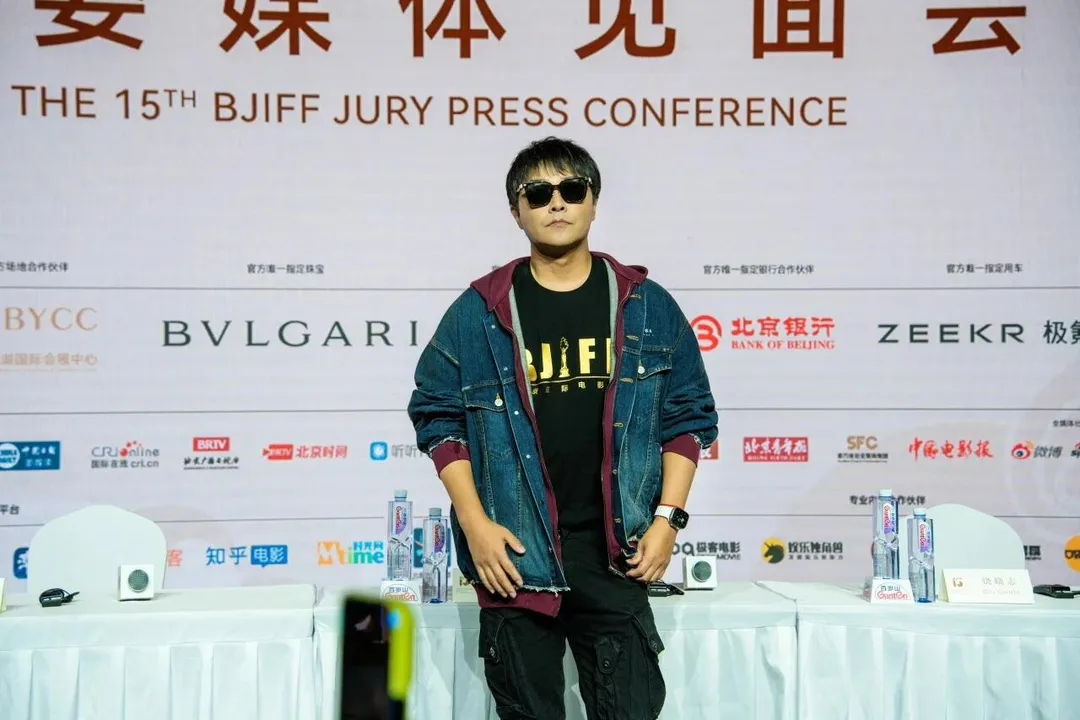
BALENCIAGA/Balenciaga fake two-piece design embroidered denim hooded jacket. Customized fog blue lock pattern pure cotton denim and red flame brushed sweatshirt material. Excellent texture, moist as cotton, comfortable and skin-friendly. Classic indigo denim is used as the main tone, and the bright red flame red makes a quantum leap between fibers, directly touching the depths of the soul. Unity sporticon art work embroidery uses thousands of stitches to reconstruct the brand totem. It is highly recognizable. The drawstring-less hood is cleverly designed. Use unique tailoring to outline a futuristic silhouette. Sublimate details into subversive fashion statements. Denim jackets are no longer limited to a single style positioning. They are either defined by tradition or redefined by rebellion. Process 1: Use imported machine embroidery technology. Use advanced computer control systems and precision mechanical components to realize the embroidery work of unity sporticon art works with high precision and smooth and delicate lines. Process 2: Use rotten edge hanging technology to achieve a natural rotten edge effect through physical wear and friction on the edges. Combining high-temperature steam and frosted paper. Remove fiber hairiness and color difference, showing unique holes and wear effects. Process 3: Use buried stitching stitching process. Denim and knit stitching can provide high-quality stitching effect, smooth and tidy. Process 4: Use multiple mosaics and high-pressure spray guns to rub sand in specific parts to achieve a local gradient effect, and then use frosting technology to create a unique texture pattern. The workmanship is extremely complex, time-consuming and labor-intensive. Process 5: Electrolysis Dark Blue➕Stone Mill Enzyme Washing Technology Prioritizes the use of electrochemical reactions to change the color of the fabric, then mixes the fabric with abrasives through a grinder and cleans it with hot water to achieve a specific washing effect. Accessories: Customized 1:1 BLCG I-buckle Customized 1:1 BLCG BB zipper puller Customized 1:1 BLCG trademark Version: Loose version Size: 1 2 3 4
13
BALENCIAGA/Balenciaga fake two-piece design embroidered denim hooded jacket. Customized fog blue lock pattern pure cotton denim and red flame brushed sweatshirt material. Excellent texture, moist as cotton, comfortable and skin-friendly. Classic indigo denim is used as the main tone, and the bright red flame red makes a quantum leap between fibers, directly touching the depths of the soul. Unity sporticon art work embroidery uses thousands of stitches to reconstruct the brand totem. It is highly recognizable. The drawstring-less hood is cleverly designed. Use unique tailoring to outline a futuristic silhouette. Sublimate details into subversive fashion statements. Denim jackets are no longer limited to a single style positioning. They are either defined by tradition or redefined by rebellion. Process 1: Use imported machine embroidery technology. Use advanced computer control systems and precision mechanical components to realize the embroidery work of unity sporticon art works with high precision and smooth and delicate lines. Process 2: Use rotten edge hanging technology to achieve a natural rotten edge effect through physical wear and friction on the edges. Combining high-temperature steam and frosted paper. Remove fiber hairiness and color difference, showing unique holes and wear effects. Process 3: Use buried stitching stitching process. Denim and knit stitching can provide high-quality stitching effect, smooth and tidy. Process 4: Use multiple mosaics and high-pressure spray guns to rub sand in specific parts to achieve a local gradient effect, and then use frosting technology to create a unique texture pattern. The workmanship is extremely complex, time-consuming and labor-intensive. Process 5: Electrolysis Dark Blue➕Stone Mill Enzyme Washing Technology Prioritizes the use of electrochemical reactions to change the color of the fabric, then mixes the fabric with abrasives through a grinder and cleans it with hot water to achieve a specific washing effect. Accessories: Customized 1:1 BLCG I-buckle Customized 1:1 BLCG BB zipper puller Customized 1:1 BLCG trademark Version: Loose version Size: 1 2 3 4
2026-10-29